




 Click it and Unblock the Notifications


Latest Updates
-
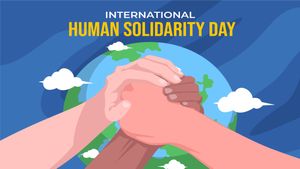 International Human Solidarity Day 2025: History, Significance, and Why It Matters
 -
 Purported Video of Muslim Mob Lynching & Hanging Hindu Youth In Bangladesh Shocks Internet
 -
 A Hotel on Wheels: Bihar Rolls Out Its First Luxury Caravan Buses
 -
 Bharti Singh-Haarsh Limbachiyaa Welcome Second Child, Gender: Couple Welcome Their Second Baby, Duo Overjoyed - Report | Bharti Singh Gives Birth To Second Baby Boy | Gender Of Bharti Singh Haarsh Limbachiyaa Second Baby
 -
 Bharti Singh Welcomes Second Son: Joyous News for the Comedian and Her Family
 -
 Gold & Silver Rates Today in India: 22K, 24K, 18K & MCX Prices Fall After Continuous Rally; Check Latest Gold Rates in Chennai, Mumbai, Bangalore, Hyderabad, Ahmedabad & Other Cities on 19 December
 -
 Nick Jonas Dancing to Dhurandhar’s “Shararat” Song Goes Viral
 -
 From Consciousness To Cosmos: Understanding Reality Through The Vedic Lens
 -
 The Sunscreen Confusion: Expert Explains How to Choose What Actually Works in Indian Weather
 -
 On Goa Liberation Day 2025, A Look At How Freedom Shaped Goa Into A Celebrity-Favourite Retreat


Sexually Transmitted Dengue Fever: World's First Case Reported In Spain

Dengue is a mosquito-borne disease caused by the dengue virus (DENV) and spread by the Aedes mosquitoes. According to The Centers for Disease Control and Prevention (CDC) around 400 million people are infected with dengue every year, globally [1]

When a person is bitten by the mosquito carrying the virus, it usually takes 4-6 days for the symptoms to appear. High fever, persistent headaches, pain behind the eyes and muscle and joint pain are the usual symptoms.
In a shocking new revelation, health experts have confirmed the world's first case of dengue transmitted through sexual contact.
First Case of Sexually Transmitted Dengue Confirmed
Spain authorities have confirmed the first case of sexually transmitted dengue. According to the health ministry officials in Madrid, this is the first case of sexual transmission of the dengue virus described in Europe and also the first case reported in men who have sex with men [2]
The reports have indeed contributed towards elevating the risk levels of this disease, making it even more of a threat than previously anticipated. The sexually transmitted dengue was reported in a 41-year-old man who had contracted dengue after having sex with his male partner who picked up the virus from a mosquito bite during a trip to Cuba.
Dengue spreading through sexual contact is a first. The doctors were able to link the disease to that of sexual contact because the individual had not travelled to a region in which dengue fever was present [3] .
As the cause of the condition was not understood, the doctors carried out an analysis of the patient's sperm, which revealed that not only did they have dengue but that it was the same virus which circulates in Cuba.
"In this particular case, once we became aware of this infection, entomological surveillance actions were carried out near the places frequented by both patients, finding no indication of the presence of said mosquito."
Another case of the sexually transmitted disease was reported in South Korea, earlier this year. It was suspected that the disease was spread through female-to-male sexual transmission. However, there was no confirmation on this [4] .
Scientists Expect Prominent Rise In Dengue Cases, Links It To Climate Change
Studies have pointed out that there is a high possibility of an increasing number of dengue cases in the next sixty years. Dengue is expected to become one of the most prevalent diseases globally. Scientists have linked to the increasing number with that of the breeding populations of Aedes aegypti mosquito, the primary vector of the disease. In recent times, there have been reports in the elevation of Aedes aegypti population, which has been linked to climate change [5] [6] .
Sexual Transmission Unlikely To Become A Common Means Of Transmission
Although the Spanish health authorities have announced sexual transmission of dengue, it is highly unlikely that it is considered to become a common means of transmission. The researchers have supported this claim through the assertion that, if the sexual transmission were to be considered a common cause of transmission, there would have been more and frequent documentation in areas of frequent transmission [7] .
However, the researchers also pointed out that there could be cases of sexual transmission of dengue in countries like India and Africa, but could be simply attributed to mosquito bites - linking it to the high population of mosquitoes in these countries [8] .
On A Final Note...
The potential for a new means of transmission of the disease has caused an alarming response. There is a need for further extensive research, which are currently underway. So that such transmission of the disease is a common occurrence can be controlled and managed.
Disclaimer: The information provided in this article is for general informational and educational purposes only and is not intended as a substitute for professional medical advice, diagnosis, or treatment. Always seek the advice of your physician or a qualified healthcare provider with any questions you may have regarding a medical condition.
- [1] Brauer, F., Castillo-Chavez, C., & Feng, Z. (2019). Dengue fever and the zika virus. In Mathematical Models in Epidemiology (pp. 409-425). Springer, New York, NY.
- [2] First Case of Sexually Transmitted Dengue in Spain and Europe - Medscape - Nov 15, 2019.
- [3] TNM. (2019, November 10). First case of sexually-transmitted dengue confirmed. Retrieved from, https://www.thenewsminute.com/article/first-case-sexually-transmitted-dengue-confirmed-112054
- [4] Martinez, C. (2019, November 15). First Case of Sexually Transmitted Dengue in Spain and Europe. Retrieved from, https://www.medscape.com/viewarticle/921406.
- [5] Robert, M. A., Christofferson, R. C., Weber, P. D., & Wearing, H. J. (2019). Temperature impacts on dengue emergence in the United States: Investigating the role of seasonality and climate change. Epidemics, 100344.
- [6] Langkulsen, U., Promsakha Na Sakolnakhon, K., & James, N. (2019). Climate change and dengue risk in central region of Thailand. International journal of environmental health research, 1-9.
- [7] Li, R., Xu, L., Bjørnstad, O. N., Liu, K., Song, T., Chen, A., ... & Stenseth, N. C. (2019). Climate-driven variation in mosquito density predicts the spatiotemporal dynamics of dengue. Proceedings of the National Academy of Sciences, 116(9), 3624-3629.
- [8] Robert, V., Günay, F., Le Goff, G., Boussès, P., Sulesco, T., Khalin, A., ... & Schaffner, F. (2019). Distribution chart for Euro-Mediterranean mosquitoes (western Palaearctic region). J Eur Mosq Control Assoc, 37, 1-28.


 Continue with Google