




 Click it and Unblock the Notifications


Latest Updates
-
 Top Skin and Hair Concerns in India in 2025: What the Data Reveals
 -
 International Human Solidarity Day 2025: History, Significance, and Why It Matters
 -
 Purported Video of Muslim Mob Lynching & Hanging Hindu Youth In Bangladesh Shocks Internet
 -
 A Hotel on Wheels: Bihar Rolls Out Its First Luxury Caravan Buses
 -
 Bharti Singh-Haarsh Limbachiyaa Welcome Second Child, Gender: Couple Welcome Their Second Baby, Duo Overjoyed - Report | Bharti Singh Gives Birth To Second Baby Boy | Gender Of Bharti Singh Haarsh Limbachiyaa Second Baby
 -
 Bharti Singh Welcomes Second Son: Joyous News for the Comedian and Her Family
 -
 Gold & Silver Rates Today in India: 22K, 24K, 18K & MCX Prices Fall After Continuous Rally; Check Latest Gold Rates in Chennai, Mumbai, Bangalore, Hyderabad, Ahmedabad & Other Cities on 19 December
 -
 Nick Jonas Dancing to Dhurandhar’s “Shararat” Song Goes Viral
 -
 From Consciousness To Cosmos: Understanding Reality Through The Vedic Lens
 -
 The Sunscreen Confusion: Expert Explains How to Choose What Actually Works in Indian Weather


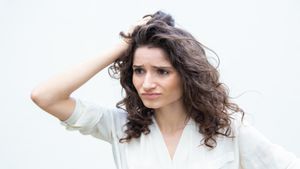
Itchy Scalp (Scalp Pruritus): Causes, Symptoms, Diagnosis, Treatment And Prevention

Itchy scalp or scalp pruritus is a common problem that affects 13 to 45 per cent of the population. Itchy scalp causes frequent scratching and discomfort, and it can be either localised to the scalp or extend to other body areas [1].
Itchy scalp may be acute or chronic (more than six weeks). In this article, we will talk about what causes itchy scalp, its symptoms, diagnosis and treatment.

What Causes Itchy Scalp? [2], [3]
Many underlying conditions or diseases can cause your scalp to itch.
1. Seborrheic dermatitis
Seborrheic dermatitis is the most common cause of itchy scalp. It is characterised by scaly patches, red skin and dandruff. Dandruff, known as pityriasis capitis is a mild form of seborrheic dermatitis which causes scales on the scalp but without redness of the skin. Seborrheic dermatitis occurs as a result of the interactions of scalp skin, sebum, Malassezia fungi (yeast) and the skin's immunity.
2. Scalp psoriasis
Scalp psoriasis is another most common inflammatory skin disease which causes an itchy scalp, the body area which is most commonly affected by psoriasis. Scalp psoriasis causes reddish, scaly patches on the scalp. A study conducted on 195 psoriasis patients revealed that 58 per cent of patients reported itching of the scalp. Health experts aren't clear about what exactly causes scalp psoriasis.
3. Scarring alopecia
Scarring alopecia refers to a group of hair loss disorders that destroy the hair follicle, replace it with scar tissue and causes permanent hair loss. Scarring alopecia causes the scalp to itch.
4. Atopic dermatitis
Atopic dermatitis causes inflamed, itchy and dry skin on the scalp. Allergies, infection, dry skin, skin irritants, heat and sweat can trigger atopic dermatitis.
5. Pityriasis amiantacea
Pityriasis amiantacea is a condition that causes excessive scaling and itching of the scalp. Scalp psoriasis, seborrheic dermatitis, atopic dermatitis and tinea capitis are some of the causes of pityriasis amiantacea.
6. Tinea capitis
Ringworm, also known as tinea capitis is a fungal infection that affects the scalp and hair shafts. Ringworm is characterised as small patches of itchy, scaly skin on the scalp.
7. Head lice
Head lice cause your scalp to itch. Lice bites cause an allergic reaction which causes an itchy feeling on the scalp. However, if the infestation of the lice is light, you may not feel itchy.
Other causes of an itchy scalp include:
•
Sensitive
scalp
•
Diabetes
•
Herpes
zoster
•
Allergic
reactions
to
medications
•
Scalp
folliculitis
•
Systemic
diseases
like
chronic
kidney
disease,
cholestatic
liver
diseases,
and
hematologic
malignancy.
•
Psychological
conditions
such
as
depression,
anxiety
and
delusional
parasitosis.

Symptoms Of Itchy Scalp
Severe itching of the scalp that is often painful is an obvious symptom of itchy scalp. However, other symptoms can accompany itchy scalp, these include:
•
Irritated
skin
•
Bald
skin
patches
•
Dry
skin
•
Skin
redness
•
Scales
or
patches
on
the
scalp
•
Scalp
swelling
•
Scalp
sores
•
Low-grade
fever

When To See A Doctor
If the itchiness doesn't go away within a few days and is accompanied by hair loss, pain, severe itching and itchy spots that are very sore to touch, you should consult a dermatologist immediately.

Diagnosis Of Itchy Scalp
The doctor will ask some questions to evaluate your itchy scalp. These include the onset of itchy scalp, affected areas other than the scalp, the type and severity and if you have any underlying chronic disease.
Then, the doctor will take a detailed history to understand the triggering factors of itchy scalp, which will focus on recent exposures to hair care products, hair care practices and medications. In addition, sun exposure, travel history or if you have come in contact with people who have been infected with infectious diseases will also be taken into account.
After which, the doctor will physically examine your scalp and hair area to check for skin conditions. A complete physical examination will be done on other body parts as well.
For a definite diagnosis, the doctor may further conduct tests like dermoscopy, wood's lamp examination and microscopic examination [4].
Image source:doctorheck.blogspot.com

Treatment Of Itchy Scalp
Depending on the causes of itchy scalp, the treatment is done.
•
Moisturising
the
scalp
with
lotions
and
oily
emollients
(creams,
lotions
or
ointments)
containing
glycerin
or
panthenol
that
helps
scalp
dryness.
•
Use
a
shampoo
with
an
optimal
pH
(4.5-6.0)
that
lowers
the
secretion
of
serine
proteases
that
can
cause
an
itchy
scalp.
•
Zinc
pyrithione
shampoo
is
used
to
treat
seborrheic
dermatitis.
•
Shampoos
containing
menthol
or
camphor
can
bring
relief
from
itchy
scalp.
•
Topical
corticosteroids
can
bring
a
quick
relief
from
itchy
scalp.
•
Antidepressant
medications
to
treat
psychological
conditions.
•
Ketoconazole,
selenium
sulfide,
and
coal
tar
shampoos
can
be
used
to
reduce
scalp
inflammation
[5].

Prevention Of Itchy Scalp
•
Avoid
using
hair
care
products
that
contain
chemicals
and
fragrances.
•
Try
to
avoid
hot-blow
drying
of
your
hair.
•
Use
hypoallergenic
products.
•
Refrain
from
sharing
other
people's
comb,
towels,
pillowcases
and
helmets.
Common FAQs
Q. Why does my scalp itch at night?
A. A number of skin conditions such as psoriasis, atopic dermatitis and head lice can cause itchy scalp at night.
Q. Why does my hair itch even after I wash it?
A. This may be due to not rinsing the shampoo properly from the hair or you are allergic to the shampoo.
Q. How can I stop my scalp from itching naturally?
A. Aloe vera gel, olive oil, coconut oil and tea tree oil can stop the itching of the scalp naturally.


 Continue with Google