




 Click it and Unblock the Notifications


Latest Updates
-
 Masik Kalashtami 2026: Significance, Rituals And Why Feeding Black Dogs Is Central To This Bhairav Observance
 -
 Daily Horoscope, Jan 10, 2026: Libra to Pisces; Astrological Prediction for all Zodiac Signs
 -
 Rajkot Shaken By 21 Earthquake Tremors In 24 Hours, Should Gujarat Be Worried?
 -
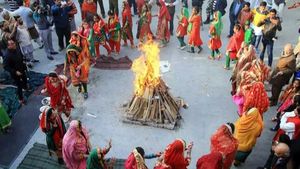 The Bonfire That Starts India’s Sankranti Season: Lohri 2026 Date, Rituals And Why Sankranti Begins With Lohri
 -
 Bharti Singh Poised to Return to Laughter Chefs 3 After Welcoming Baby
 -
 When An MLA Joked About Rape And What It Reveals About India’s Deep Crisis Of Sexual Violence
 -
 Prada Turns Chai Into Luxury Perfume: Would You Spend ₹17,000 To Smell Like Your Cup Of Tea?
 -
 Jana Nayagan Case: Madras HC Directs CBFC To Issue U/A Certificate, Vijay's Film Set For Release
 -
 Why Kids Are Always ‘Bored’: Expert Explains The Psychology Behind Constant Stimulation
 -
 ‘Ishq Da Chehra’ from Border 2: A Soft, Soulful Love Story Led by Diljit Dosanjh and Sonam Bajwa


What Is Bhajan Clubbing And Why It’s Suddenly Everywhere

There is newfound excitement in Indian music and societies with a mixture of old devotional music and new collective music approaches - 'bhajan jamming' or 'bhajan clubbing' in particular. It is a trend that has otherwise seen devotional music in bhajan move from temples and private residences to group live performances and events that bring together all age groups, especially younger generations in urban areas.
From Temple Courtyards to Concert-Like Vibes
Basically, bhajan clubbing carries forward the devotion, lyrics, and religious essence of traditional bhajans, which are devotional songs that praise gods like Krishna, Rama, and Shiva, but imposes a different context and format on these tracks:

- Live gatherings: These aren't formal religious ceremonies; they're events where musicians and participants sit or stand together, often with instruments and amplification, and sing or chant bhajans collectively.
- Modern arrangements: Traditional vocals mingle with guitars, percussion or ambient music arrangements. In some locations, lighting and sound equipment create a concert-like atmosphere.
- Community focus: The emphasis is less on ritual etiquette and more on shared feeling, joy, and connection, people clap, chant and sometimes even dance along during the sessions.
What makes it feel new isn't just the music, it's the experience: it can resemble a live show, a social gathering or even a festival, but with devotional songs at the centre.
Why It's Becoming Popular Now
1. Spirituality Meets Social Life
The young crowd, especially Gen Z and millennials in Delhi, Mumbai, Ahmedabad, and Bengaluru, are searching for something meaningful but social at the same time. Bhajan jamming gives them a space that's alive, collective, and uplifting without the alcohol or loud DJ culture of nightclubs.
2. A Fresh Take on Tradition
Instead of being limited to temples or older generations, bhajan jamming presents devotional music as a shared, social experience. People sit or stand together, clap or raise their hands, and chant bhajans like "Shri Krishna Govind Hare Murari," soaking in the energy of singing as a group.
3. Community and Identity
In the current fast-paced world where people have virtual or disjoined social lives, the jam sessions offer a physical point of connection for individuals. They provide a sense of belonging to a community beyond their own, a moment that is cultural and spiritual in nature.
4. Blurring Boundaries Between Sacred & Social
Bhajan jamming does not negate tradition; it reinterprets tradition. By transposing traditional devotional singing into an urban setting and an era that could be said to be secular, it bridges a historical distance between spirituality and modern life.
Is It Just a Trend Or Something Deeper?
Some people question whether these events are genuine spiritual practices or just a new social trend. But their growing popularity suggests something deeper. Many young people are reconnecting with devotional music in their own way and forming communities around it. The sharp rise in searches for terms like 'bhajan clubbing' and 'modern kirtan' shows that this interest goes beyond simple curiosity.


 Continue with Google