




 Click it and Unblock the Notifications


Latest Updates
-
 Masik Kalashtami 2026: Significance, Rituals And Why Feeding Black Dogs Is Central To This Bhairav Observance
 -
 Daily Horoscope, Jan 10, 2026: Libra to Pisces; Astrological Prediction for all Zodiac Signs
 -
 Rajkot Shaken By 21 Earthquake Tremors In 24 Hours, Should Gujarat Be Worried?
 -
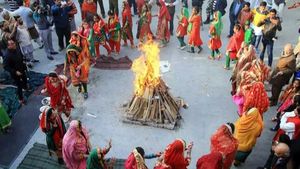 The Bonfire That Starts India’s Sankranti Season: Lohri 2026 Date, Rituals And Why Sankranti Begins With Lohri
 -
 Bharti Singh Poised to Return to Laughter Chefs 3 After Welcoming Baby
 -
 What Is Bhajan Clubbing And Why It’s Suddenly Everywhere
 -
 Prada Turns Chai Into Luxury Perfume: Would You Spend ₹17,000 To Smell Like Your Cup Of Tea?
 -
 Jana Nayagan Case: Madras HC Directs CBFC To Issue U/A Certificate, Vijay's Film Set For Release
 -
 Why Kids Are Always ‘Bored’: Expert Explains The Psychology Behind Constant Stimulation
 -
 ‘Ishq Da Chehra’ from Border 2: A Soft, Soulful Love Story Led by Diljit Dosanjh and Sonam Bajwa


When An MLA Joked About Rape And What It Reveals About India’s Deep Crisis Of Sexual Violence

A resurfaced video of a senior Karnataka legislator making a controversial remark about rape inside the Legislative Assembly has once again triggered widespread outrage and reopened a national conversation on women's safety, political accountability, and the treatment of sexual violence in India.
The clip shows Congress MLA and former Karnataka Assembly Speaker K. R. Ramesh Kumar stating, "There is a saying that when rape is inevitable, lie down and enjoy it." The comment, originally made in 2021 during a discussion unrelated to women's issues, has gone viral again on social media, drawing sharp criticism from across the political spectrum and civil society.

What has particularly disturbed many viewers is the reaction inside the House at the time, where several lawmakers were seen laughing. Though Ramesh Kumar later issued an apology, calling his words an "off-the-cuff remark" and saying he did not intend to trivialise the crime, the renewed circulation of the video has raised questions about the mindset prevalent within political institutions.
Rape In India: The Numbers Behind The Crisis
India continues to report a high number of sexual violence cases each year. According to data from the National Crime Records Bureau (NCRB), more than 30,000 rape cases are registered annually, averaging close to 90 reported cases per day. Experts caution that these figures represent only reported cases, as underreporting remains a significant concern due to social stigma, fear of retaliation, and lack of trust in the justice system.
NCRB data consistently indicates that in nearly nine out of ten cases, the accused is known to the survivor. Conviction rates in rape cases remain low in several states, highlighting challenges in investigation, prosecution, and judicial delays.
Cases That Shook The Nation
The debate around women's safety is closely tied to high-profile cases that exposed institutional failures and misuse of power. One such case was the Unnao rape case, involving former BJP MLA Kuldeep Singh Sengar. In 2017, a minor accused Sengar of rape. Instead of receiving immediate protection, the survivor and her family faced sustained intimidation.
Her father later died in police custody, and the survivor was critically injured in a road accident that killed two of her aunts. Following nationwide outrage and Supreme Court intervention, Sengar was convicted in 2019 and sentenced to life imprisonment. The case became a symbol of how political influence can delay justice.
Another case that sparked widespread protests was the Ankita Bhandari rape and murder case in Uttarakhand in 2022. Ankita, a 19-year-old resort receptionist, was allegedly raped and killed after resisting pressure to provide "special services" to guests. The case drew attention due to the alleged political connections of the accused and raised concerns over evidence handling and procedural delays. Public demonstrations across the state demanded swift and transparent justice.
Impact Of Political Language On Public Discourse
Women's rights activists and legal experts argue that statements like the one made by Ramesh Kumar contribute to the normalisation of sexual violence. When rape is used as casual language or metaphor by elected representatives, it risks undermining the seriousness of the crime and discouraging survivors from coming forward.
The National Commission for Women (NCW) had earlier termed the remark "disgusting" and said such comments reflect a problematic attitude towards crimes against women. The Congress party also distanced itself from the statement, calling it insensitive and inappropriate.
Beyond Viral Videos
While apologies and condemnations follow such incidents, critics say lasting change requires more than damage control. They point to the need for:
- Greater accountability for public representatives
- Sensitisation training for lawmakers and law enforcement
- Faster trials and higher conviction rates
- Survivor-centric legal and policing reforms
The resurgence of the video has once again highlighted the gap between policy discussions on women's safety and the attitudes displayed in public institutions. As India continues to grapple with rising sexual violence cases, incidents like these reinforce concerns that laws alone cannot ensure safety unless accompanied by cultural and institutional change. For many, the viral clip is not just about one statement - it is a reflection of a deeper problem that the country has yet to fully confront.


 Continue with Google