




 Click it and Unblock the Notifications


Latest Updates
-
 Gold Rate In India Crash By Rs 12,000 From Record: Will 24K, 22K, 18K Gold Prices Rise Or Fall In Christmas Week? Gold & Silver Prediction Here
 -
 20th or 21st December? When Is the Winter Solstice In 2025 And How Is It Different From Meteorological Winter
 -
 ‘Clean Air Is a Right, Not a Luxury’: ZONAIR3D Unveils India Expansion Plans
 -
 World Meditation Day 2025: Meditation Beyond The Mat, Simple Moments That Bring Inner Peace
 -
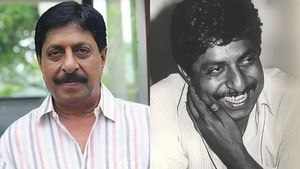 Sreenivasan Passes Away: Malayalam Cinema Mourns The Legendary Actor-Writer's Demise
 -
 Malayalam Film Industry Loses A Defining Voice: Actor, Screenwriter And Director Sreenivasan Passes Away At 69
 -
 Happy Birthday Dheeraj Dhoopar: How A TV Set Friendship Turned Into Love With Wife Vinny Arora
 -
 Top Skin and Hair Concerns in India in 2025: What the Data Reveals
 -
 International Human Solidarity Day 2025: History, Significance, and Why It Matters
 -
 Purported Video of Muslim Mob Lynching & Hanging Hindu Youth In Bangladesh Shocks Internet


The Pursuit of Happiness in Life

I had an interesting encounter last week at a bookshop when I went to purchase Sarah Mc Donald's 'Holy Cow,' a humorous account of Australian's mystical adventures in India. The owner of the bookshop opened up a friendly chat with me when he learnt that I am teaching at a university where one of his sons did his undergraduate studies in computer applications. He told me that his elder son is a sober, unassuming person and since childhood he was always contented with life and never sought things that seemed beyond his grasp. The younger one on the other hand was highly ambitious and tried to get the best of life in every possible way, including imported shoes, which cost the family a fortune when it was facing a financial crunch. The elder son is now managing the bookshop along with his father and the younger one is earning a six-digit salary working in the software industry in the US!
Vedanta classifies all human pursuits in these two categories - expansion (pravritti) and withdrawal (nivritti). The first type tries to conquer everything to satisfy his desires and to be happy. The second retreats from this onward rush of material pursuits and tries to find peace by giving it up. However, neither of these approaches leads to the resolution of that fundamental psychological conflict which we will discuss in detail in the next article.
Vedanta says that these tendencies to seek or give up objects in the pursuit of happiness are both born out of an erroneous understanding. It is not the object itself that we are seeking but we try to become different by possessing or getting rid of something. An ice cream that gives you happiness when consumed once can become a painful experience if taken in large quantities. One man may go on expanding his material possessions and yet find no rest or satisfaction. Another may give up all his material wealth in search of peace of mind and become more miserable than what he was earlier!
This desire to be different from what we are right now is what drives us into this endless cycle of expansion and withdrawal. It is like a toothache, which gives a nagging pain till it is cured, or the tooth itself is removed.
However,
as
long
as
our
notion
of
the
Self
is
limited,
the
toothache
is
likely
to
persist.
Vedanta
is
that
process
of
enquiry
through
which
all
such
misconceptions
are
cleared
and
the
limitless
Self
is
perceived
with
clarity
and
conviction.
And
the
corrected
perception
of
the
Self
puts
an
end
to
this
merry-go-round
of
life.


 Continue with Google