




 Click it and Unblock the Notifications


Latest Updates
-
 Farah Khan Birthday Special: The IVF Journey ‘The Main Hoon Na’ Director Opened Up About When Few Did
 -
 Pravasi Bharatiya Divas 2026: How Mahatma Gandhi’s South Africa Return Defined India’s NRI Day
 -
 Daily Horoscope, Jan 09, 2026: Libra to Pisces; Astrological Prediction for all Zodiac Signs
 -
 Astrology Reveals The Best And Worst Dates This January 2026 That Can Make Or Break Major Decisions
 -
 PCOS Is No Longer Just a Reproductive Disorder: Understanding Its Long-Term Health Impact
 -
 Why Platinum Is Becoming the Ultimate Metal of Love for Modern Couples
 -
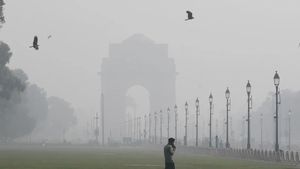 Delhi Freezes at 5.8°C: Coldest Morning This Season, Here’s What It Means for Your Health
 -
 Haridwar Ghats Under Review: Uttarakhand May Ban Non-Hindu Entry Across 105 Ghats Ahead Of Ardh Kumbh 2027
 -
 Gold Rate In India Today Corrects After Record Run, MCX Futures Decline: Check City Wise Gold & Silver Prices On Jan 8
 -
 Toxic Movie Trailer Sets the Mood for a High-Octane Gangster Drama


India Loses An Environmental Pioneer: Gadgil Report Author Madhav Gadgil Passes Away In Pune At 83

Veteran ecologist Madhav Gadgil passed away in Pune on the night of January 7, 2026, following a brief illness. He was 83. The news was confirmed by his family, including his son Siddhartha Gadgil. One of India's most influential environmental thinkers, Gadgil's death marks the end of a life spent questioning how the country treats its land, forests, and people often uncomfortably so.

The Man Who Changed How India Talked About Ecology
Born in Pune on May 24, 1942, Madhav Dhananjaya Gadgil was not just an ecologist by training but a public intellectual by instinct. At a time when environmental conversations were limited to forests and wildlife, Gadgil widened the lens. He spoke about people, livelihoods, power structures, and ecology as one system.
He founded the Centre for Ecological Sciences at the Indian Institute of Science (IISc), Bengaluru, which went on to become one of India's most respected hubs for ecological research. Over decades, he mentored generations of scientists who carried forward his insistence on field-based, community-aware science.
The Western Ghats Report That Shook Governments
Gadgil is best known to the public as the head of the Western Ghats Ecology Expert Panel (WGEEP), constituted by the Ministry of Environment in 2010. The panel's 2011 report, often called the Gadgil Report, recommended classifying large parts of the Western Ghats as Ecologically Sensitive Zones.
What made the report contentious was not just its environmental findings, but its tone. It argued for local participation, stricter controls on mining and construction, and decentralised decision-making. Several state governments opposed it, calling it impractical and anti-development. The report was eventually diluted, but it permanently changed how ecological impact and governance were discussed in India.
A Scientist Who Refused To Stay Inside Laboratories
Unlike many academics, Gadgil was comfortable stepping into public debates. He wrote extensively for newspapers, engaged with grassroots movements, and challenged policymakers directly. His work linked traditional ecological knowledge with modern science, long before that approach became fashionable.
He also served on the Scientific Advisory Council to the Prime Minister, bringing his environmental perspective into policy discussions often as a dissenting voice rather than a convenient one.
Awards That Followed His Work
Over the years, Madhav Gadgil received several major honours, including the Padma Shri (1981) and Padma Bhushan (2006). In 2024, he was awarded the UN's Champions of the Earth Lifetime Achievement Award, recognising decades of work that reshaped environmental thought in India and beyond.
Those who knew him often pointed out that awards never softened his positions. He remained consistent sometimes to the discomfort of institutions and governments.
Final Rites And Remembrance
Gadgil's last rites were held in Pune, the city where he was born and where he spent much of his life. Tributes poured in from scientists, environmental activists, students, and civil society groups across the country, many calling him a moral compass for India's environmental movement.
What His Passing Leaves Behind
Madhav Gadgil leaves behind more than reports and research papers. He leaves a question that India is still struggling to answer: Can development exist without erasing ecology and community voices?
At a time when environmental debates are often reduced to headlines and hashtags, Gadgil's life reminds us that real change is slow, uncomfortable, and rooted in evidence. His absence will be felt not because he was universally liked, but because he was consistently honest.
In a country negotiating its future under mounting ecological pressure, that honesty matters more than ever.


 Continue with Google