




 Click it and Unblock the Notifications


Latest Updates
-
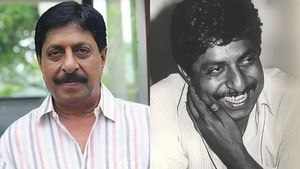 Sreenivasan Passes Away: Malayalam Cinema Mourns The Legendary Actor-Writer's Demise
 -
 Malayalam Film Industry Loses A Defining Voice: Actor, Screenwriter And Director Sreenivasan Passes Away At 69
 -
 Happy Birthday Dheeraj Dhoopar: How A TV Set Friendship Turned Into Love With Wife Vinny Arora
 -
 Top Skin and Hair Concerns in India in 2025: What the Data Reveals
 -
 International Human Solidarity Day 2025: History, Significance, and Why It Matters
 -
 Purported Video of Muslim Mob Lynching & Hanging Hindu Youth In Bangladesh Shocks Internet
 -
 A Hotel on Wheels: Bihar Rolls Out Its First Luxury Caravan Buses
 -
 Bharti Singh-Haarsh Limbachiyaa Welcome Second Child, Gender: Couple Welcome Their Second Baby, Duo Overjoyed - Report | Bharti Singh Gives Birth To Second Baby Boy | Gender Of Bharti Singh Haarsh Limbachiyaa Second Baby
 -
 Bharti Singh Welcomes Second Son: Joyous News for the Comedian and Her Family
 -
 Gold & Silver Rates Today in India: 22K, 24K, 18K & MCX Prices Fall After Continuous Rally; Check Latest Gold Rates in Chennai, Mumbai, Bangalore, Hyderabad, Ahmedabad & Other Cities on 19 December


Why Bhakti Yoga Is Superior To Other Paths Of Devotion?


Karma means activity performed within the restrictions of Dharma with an intention to enjoy the good consequences of the good karma. The real karma yogi does his duties with utmost sincerity without expecting results in the least. An ordinary person who does karmic deeds seeks reward for his good karma and also realms like deva loka after his death. The karma forces this person into several birth death cycles by transmigrating his soul. Activity tabooed by Vedas is called Vikarma.. All karma, whatever way it is labelled, be it good, bad or pious, keeps one bound within the mortal cycles.
Jnana is accumulation of spiritual knowledge, A jnani knows the defects associated with karma and explores higher knowledge. He is engaged in meditative and philosophic pursuits. He strives to attain the supreme godhead, by cultivating jnana by studying Veda or by meditative practices. But in his quest for knowledge, he loses out on the internal close communion with God. He ends up in the same position as Karma yogi within the confines of mortal cycle. The devas pray to Lord Krishna the essence of which contains a mention about the Gnyani's shortcomings.
What Does Bhagavad Gita Say About It?
"O
lotus-eyed
Lord,
although
non
devotees
who
accept
severe
austerities
and
penances
to
achieve
the
highest
position
may
think
they
are
liberated,
their
intelligence
is
impure.
They
fall
down
from
their
position
since
they
have
no
regard
for
Your
lotus
feet.
[Bhag.
10.2.32]"
The
third
category
of
devotion
is
yoga.
Lord
Krishna
says
""A
yogi
is
greater
than
the
ascetic,
greater
than
the
gnyani,
and
greater
than
the
karma
yogi.
Therefore,
O
Arjuna,
in
all
circumstances
be
a
yogi"
(Bg.
6.46).
There
are
many
types
of
yoga,
such
as
hatha-yoga,
ashtanga-yoga,
raja-yoga,
dhyana-yoga,
and
bhakti-yoga.
Real
yoga
as
taught
by
Krishna
in
the
Sixth
Chapter
of
Bhagavad-Gita
is
a
meditation
system
that
is
practiced
to
completely
absorb
the
mind
in
the
supreme.
Yogic
sadhana
leads
to
many
siddhis
or
some
degree
of
mastery
over
the
natural
phenomenon.
You
see
that
some
yogis
walk
on
air,
water
and
become
extremely
puny
in
size
etc.
This
attracts
the
yogi
so
much
that
he
gets
deeply
involved
in
the
siddhis
and
forgets
his
main
sojourn
towards
the
supreme.
All
these
problems,
in
their
entirety,
do
not
bother
the
Bhaktha
who
decries
all
of
these
systems.
Bhakti.
For
example,
when
karma,
or
activity,
is
joined
with
devotional
service,
it
becomes
karma-yoga,
action
in
Krishna
consciousness.
Lord
Krishna
recommends
this
in
the
Bhagavad-Gita
(9.27):
"Whatever
you
do,
whatever
you
eat,
whatever
you
offer,
and
whatever
austerities
you
perform
do
that,
as
an
offering
to
Me"
(Bg.
9.27).
Jnanis
are
full
of
pride,
with
no
sense
of
surrender.
They
should
surrender
to
God
and
realize
God
runs
the
entire
universe.
Then
jnana
becomes
jnana-yoga
and
is
purified
of
mental
speculation.
As
Krishna
says
in
the
Bhagavad-Gita
(7.19),
"After
many
births
and
deaths,
he
who
is
actually
in
knowledge
surrenders
unto
Me,
knowing
Me
to
be
the
cause
of
all
causes
and
all
that
is.
Such
a
great
soul
is
very
rare"
(Bg.
7.19).
Krishna
also
explains
in
the
sixth
chapter
that
immersing
oneself
in
the
Godly
consciousness
is
the
ultimate
form
of
yoga.
"And
of
all
yogis,
the
one
with
great
faith
who
always
abides
in
Me,
thinks
of
Me
within
himself,
and
renders
transcendental
loving
service
to
Me
he
is
the
most
intimately
united
with
Me
in
yoga
and
is
the
highest
of
all.
That
is
My
opinion"
(Bg.
6.47).
Although
Krishna
judges
the
karma,
jnana,
and
yoga
paths
to
be
good
ways
to
reach
God,
devotion
is
the
ultimate
tool
to
reach
Lord
Krishna
easily.
"Always
think
of
Me,
become
My
devotee,
worship
Me,
and
offer
your
homage
unto
Me.
Thus,
you
will
come
to
Me
without
fail.
I
promise
you
this
because
you
are
My
very
dear
friend.
Abandon
all
varieties
of
religion
and
just
surrender
unto
Me.
I
shall
deliver
you
from
all
sinful
reactions.
Do
not
fear"
(Bg.
18.65-66).
Bhakti
is
all
about
complete
involvement
and
surrender
and
feels
and
exists
closest
to
God
since
he
is
merged
in
his
feet.
Disclaimer:
The
information
is
based
on
assumptions
and
information
available
on
the
internet
and
the
accuracy
or
reliability
is
not
guaranteed.
Boldsky
does
not
confirm
any
inputs
or
information
related
to
the
article
and
our
only
purpose
is
to
deliver
information.
Kindly
consult
the
concerned
expert
before
practising
or
implementing
any
information
and
assumption


 Continue with Google