




 Click it and Unblock the Notifications


Latest Updates
-
 Gold Rate In India Crash By Rs 12,000 From Record: Will 24K, 22K, 18K Gold Prices Rise Or Fall In Christmas Week? Gold & Silver Prediction Here
 -
 20th or 21st December? When Is the Winter Solstice In 2025 And How Is It Different From Meteorological Winter
 -
 ‘Clean Air Is a Right, Not a Luxury’: ZONAIR3D Unveils India Expansion Plans
 -
 World Meditation Day 2025: Meditation Beyond The Mat, Simple Moments That Bring Inner Peace
 -
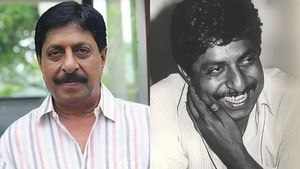 Sreenivasan Passes Away: Malayalam Cinema Mourns The Legendary Actor-Writer's Demise
 -
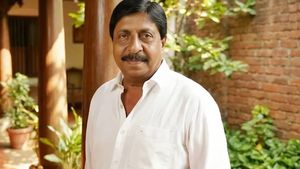 Malayalam Film Industry Loses A Defining Voice: Actor, Screenwriter And Director Sreenivasan Passes Away At 69
 -
 Happy Birthday Dheeraj Dhoopar: How A TV Set Friendship Turned Into Love With Wife Vinny Arora
 -
 Top Skin and Hair Concerns in India in 2025: What the Data Reveals
 -
 International Human Solidarity Day 2025: History, Significance, and Why It Matters
 -
 Purported Video of Muslim Mob Lynching & Hanging Hindu Youth In Bangladesh Shocks Internet


The Grandest Of All Truths-Part III


It is important to remember that not only must there be the effort to keep in mind the thought of our death, but we must persist with this practice even through the dark, depressing days of despondency. Wherever perseverance, grit and a strong will to succeed are present, light has got to come sooner or later. That is what happens in the case of meditation on death too. If Nachiketa could remain doggedly resolute in his quest to know the secret of death, brushing aside all of Yama's alternative, tempting offers, it was because Nachiketa had for long contemplated on the fact of his own death. At the end of Yama's teaching, Nachiketa was an altogether transformed person. The form of a child remained, but his consciousness had smashed all barriers and become one with the universal consciousness.
The thought of death was the turning point in Siddhartha's life too. On his maiden chariot-drive outside the palace, the young prince encountered disease, old age, and death. He might as well have driven on, dismissing these things as the inevitable facts of life one has to somehow live with. That is what most of us do. If Siddhartha too had done that, he wouldn't have become the great Buddha and we wouldn't be remembering him twenty-five centuries after he passed on. But the thought of human suffering, culminating in that climactic, mysterious event called death, never left Siddhartha's mind after what he saw outside the palace. When he solved the mystery years later under the Bodhi tree, Siddhartha was a transformed figure. Gone was the prince of Kapilavastu and in his place stood the Enlightened One, the prince of renunciation and compassion.
The passing away of Shivaguru, Adi Shankara's father, brought about a profound change in the mind of young Shankara. Encountering the reality of death so early in life, the young boy began to view the world in an entirely new light. Life was never the same for him again. He never looked back until he had solved the mystery of death. Indeed, a Sanskrit movie on Shankara's life showed him always flanked by two companions, Knowledge and Death: Shankara had acquired the first and conquered the second. Visible only to Shankara, these two followed him everywhere. Towards the end of the movie, we see Death bidding farewell to Shankara—and the great monk intuitively realizing that the time had come for him to lay down the body and enter the infinite, indescribable realm of immortality.
A similar thing happened in the life of a boy named Ramakrishna, who lived at Kamarpukur, an out-of-the-way village in Bengal. He was only seven when his father Kshudiram died. The whole family was plunged into sorrow. But the death of Kshudiram affected Ramakrishna more fundamentally than it did others.
To all appearances, there was little change in the merry, lively child. But inwardly a tremendous transformation had taken place. Not many knew that the young boy had begun to quietly slip away and wander alone in the Bhutir Khal cremation ground or in other solitary spots in the village. This inner change, sparked off by the event of his father's death, reached its logical culmination at Dakshineswar when Ramakrishna experienced the Truth that transcends death. Thousands in all parts of the world are today studying the life of Sri Ramakrishna and striving to put into practice his inspiring, powerful teachings, in order to conquer both life and death.
These are just a few examples to show how the persistent thought of death, instead of demoralizing and weakening a person, can bring about a qualitative improvement in life, not only uplifting and strengthening the person but also wafting him or her into the arms of the Immortal Being where death has no access.
The usual question arises: The examples given are all of extraordinary people, all geniuses. How can what applies to them apply to us ordinary people? Vivekananda answers: The science of yoga tells us that we are all geniuses if we try hard to be. Some will come into this life better fitted and will do it quicker perhaps. We can all do the same. The same power is in everyone.
About
the
author
Swami Tyagananda
Swami Tyagananda is a monk of the Ramakrishna Order and presently head of the Ramakrishna Vedanta Society in Boston.
Chat
With
The
Devotees
Of
Ramakrishna
Paramahamsa


 Continue with Google