




 Click it and Unblock the Notifications


Latest Updates
-
 ‘Clean Air Is a Right, Not a Luxury’: ZONAIR3D Unveils India Expansion Plans
 -
 World Meditation Day 2025: Meditation Beyond The Mat, Simple Moments That Bring Inner Peace
 -
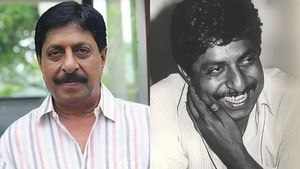 Sreenivasan Passes Away: Malayalam Cinema Mourns The Legendary Actor-Writer's Demise
 -
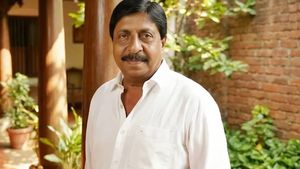 Malayalam Film Industry Loses A Defining Voice: Actor, Screenwriter And Director Sreenivasan Passes Away At 69
 -
 Happy Birthday Dheeraj Dhoopar: How A TV Set Friendship Turned Into Love With Wife Vinny Arora
 -
 Top Skin and Hair Concerns in India in 2025: What the Data Reveals
 -
 International Human Solidarity Day 2025: History, Significance, and Why It Matters
 -
 Purported Video of Muslim Mob Lynching & Hanging Hindu Youth In Bangladesh Shocks Internet
 -
 A Hotel on Wheels: Bihar Rolls Out Its First Luxury Caravan Buses
 -
 Bharti Singh-Haarsh Limbachiyaa Welcome Second Child, Gender: Couple Welcome Their Second Baby, Duo Overjoyed - Report | Bharti Singh Gives Birth To Second Baby Boy | Gender Of Bharti Singh Haarsh Limbachiyaa Second Baby


The Grandest Of All Truths-Part V


Vedanta Kesary 1993 June p.202-207
With these newly acquired characteristics, which transform OP (Old person) to NP (New person), the person continues to quest for that which lies beyond death. Not for nothing did Swamiji call Sannyasa 'love of death.' This should not be considered as meant only for those who embrace the monastic life. Every genuine spiritual seeker is a monastic, although only a few among these may get the inner call to receive the insignia of monasticism.
While the monastic renounces both externally and internally, the lay seeker practises renunciation only internally. That is all the difference there is between a monastic spiritual seeker and a lay spiritual seeker. Undue emphasis has been laid on the differences between monastic life and lay life. It is not important whether a person is a monastic or a non-monastic; what really matters is whether the person is a true seeker of God. And that is easy enough to verify, for every true seeker loves death.
Swamiji explains: Worldly people love life. The Sannyasin is to love death. Are we to commit suicide then? Far from it. For suicides are not lovers of death, as it is often seen that when a man trying to commit suicide fails, he never attempts it for a second time. What is the love of death then? We must die, that is certain; let us die then for a good cause."
Swamiji then goes on to show how the little individuality of ours, which is centred round the body and mind, must be replaced with a universal 'individuality' that is capable of embracing everyone and everything. The constant thought of death gives us that tremendous impetus to break away from the hold, our narrow self has over us. It widens our consciousness and this finds expression as selfless, un-alienated love towards the entire creation.
The spirit of service thus naturally fills the heart of an awakened soul. The body-mind-centred individuality of OP begins to fade away and its place is gradually taken by the God-centred individuality of NP. When this process is complete, an amazing change takes place. The thought 'I will die one day' throws aside the veil over itself and we come face-to-face with the truth which proclaims 'I will never die.' The grandest of all truths, which reminded me every moment of my death, now takes me by the hand and leads me through the doorway to the absolute truth of my immortal nature.
OP felt 'I will die one day' because his I was mixed up with his body and mind. NP realizes that 'I will die one day' really means 'I will be separated one day from my body.' The death that terrifies us all so much is nothing but the separation of the body from me and my mind. So it is really the death of the body, not/My death, because I and my mind continue to live. Moreover, I don't have to remain bodiless for ever. Soon enough I get another body. In the words of the Gita(2.22), it is just like changing the old dress for a new one.
The body-dress changes in every life. And since all of us have had millions of past lives, we have changed our dresses millions of times. Doesn't it now appear quite silly to make a big deal about such a simple matter as changing the dress? When we think about it calmly, death loses its terror for us.
About
the
author
Swami Tyagananda
Swami Tyagananda is a monk of the Ramakrishna Order and presently head of the Ramakrishna Vedanta Society in Boston.


 Continue with Google