




 Click it and Unblock the Notifications


Latest Updates
-
 ‘Clean Air Is a Right, Not a Luxury’: ZONAIR3D Unveils India Expansion Plans
 -
 World Meditation Day 2025: Meditation Beyond The Mat, Simple Moments That Bring Inner Peace
 -
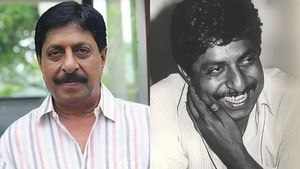 Sreenivasan Passes Away: Malayalam Cinema Mourns The Legendary Actor-Writer's Demise
 -
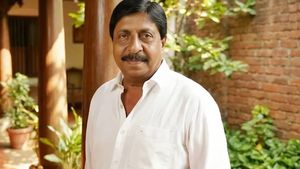 Malayalam Film Industry Loses A Defining Voice: Actor, Screenwriter And Director Sreenivasan Passes Away At 69
 -
 Happy Birthday Dheeraj Dhoopar: How A TV Set Friendship Turned Into Love With Wife Vinny Arora
 -
 Top Skin and Hair Concerns in India in 2025: What the Data Reveals
 -
 International Human Solidarity Day 2025: History, Significance, and Why It Matters
 -
 Purported Video of Muslim Mob Lynching & Hanging Hindu Youth In Bangladesh Shocks Internet
 -
 A Hotel on Wheels: Bihar Rolls Out Its First Luxury Caravan Buses
 -
 Bharti Singh-Haarsh Limbachiyaa Welcome Second Child, Gender: Couple Welcome Their Second Baby, Duo Overjoyed - Report | Bharti Singh Gives Birth To Second Baby Boy | Gender Of Bharti Singh Haarsh Limbachiyaa Second Baby


Never Mind The Mind-Part III


What is the appropriate enquiry? It is the enquiry about the self. The question arises as to what we are referring to when we say we are enquiring into the self. What is self-enquiry? Does it refer to the mind, the ego or the Atman? Obviously it cannot refer to the Atman for the limited cannot measure the infinite. It therefore refers to the mind. Can the mind enquire about itself? Can it look at itself? Yes. Ramana has explained what exactly it means. Firstly, there is the need to examine the validity of some of our assumptions about the mind itself.
In all our attempts at mind control we take for granted that there is a separate entity called the mind. This is a fundamental mistake says Ramana. He would say, "Mind is intangible. In fact it does not exist." "When we see what the mind is there is nothing like it". "If you search for it, it will vanish by itself for it has no real existence". "If an enquiry is made whether mind exists, it will be found that mind does not exist" and so on. At the same time, he would patiently explain to the devotees that the mind is only a series of thought patterns with the core thought of individuality and other thoughts which keep changing according to the response of the individual to the world at particular points of time.
Again the multiplicity and variety of thoughts need not scare us. Why? Because though they are vast in number they are all essentially dependent like creepers on a tree. Unless the individual pays attention to a specific thought it cannot surface on the thought horizon. Have you not heard of being absent minded? The other person may be chattering but his words do not register for the attention of the individual is not there.
Following from this is the importance of paying attention to the centre, to the me. This only means that whenever there is a mental movement, wherever there is the formation of thought clouds, before they gather momentum they have to be arrested. They need to be stopped at the hustling. This is done by questioning for whom these thoughts arise. Such questioning would bring back the attention from the thoughts to the thinker.
This is the first but essential step in warding off thought formations and for preventing their build up. Being off the mental movement enables one to stay with the 'I' – thought. The moment this happens the mind turns inwards. For the mind rises from the Self, the Consciousness. When the connection with thoughts is severed it falls back into its source. In fact in the Ramana Way the emphasis is not so much on the content of the mind, though we begin with it to explain the nature of the mind, as with the source of thought.
Once there is success in turning the mind back and in exposing it to the light of the Self the mind is restored to its pristine purity and quietness. The process of getting back to the source was once explained by Ramana to his attendant Rangaswami. A nest was built above Bhagavan's couch by a squirrel. A cat had eaten the mother of the young squirrels and the responsibility for their care was taken over by Bhagavan. Each time a young squirrel came out of the nest, Ramana would put it back into the nest so that it may be safe there. For there was danger outside which the young ones did not realize. Bhagavan's purpose was to make the squirrels enjoy staying within. Just then Rangaswami asked, "What is the path for keeping inward?" Ramana replied, "It is exactly the same as what I am doing now. Pushing back the mind to its source, the heart, is the purpose of spiritual practice so that the mind may taste the happiness and peace which is its essential nature.
But if peace and happiness is only the end product, if one does not have the experience of that state along the way, as one keeps at practice, one is likely to lose interest. The absence of an experience of different dimension would make one fall back on known ways of assuming that pleasure comes from object. Ramana assures that one does not need to have a patient or a long wait. Even though the process of transformation is gradual one begins to feel the fresh inner joy fairly early. Ramana told Humphreys as far back as 1911 that even if he were to meditate, rightly, for about ten to fifteen minutes a day, in a couple of months there would be a change in mental attitudes. One would acquire power, always as a background, to deal more harmoniously with others, with ideas and events. Nothing would be overwhelming and things would be seen in the right perspective.
There are also some tests which would be the barometers of change. Firstly, in our 'loveless heart' seeds of love would have been sown. There would be a growing expansion of the heart in compassion, in fellow-feeling and love for those around us. All things which eat into love like judgements, jealousies and the like would wane. Then there would be a general feeling of well being, an exhilaration in everything, a true zest in whatever we are involved in. Freed from the cramping effects of an overcrowded mind, one would live immersed in peace and joy.


 Continue with Google