




 Click it and Unblock the Notifications


Latest Updates
-
 ‘Clean Air Is a Right, Not a Luxury’: ZONAIR3D Unveils India Expansion Plans
 -
 World Meditation Day 2025: Meditation Beyond The Mat, Simple Moments That Bring Inner Peace
 -
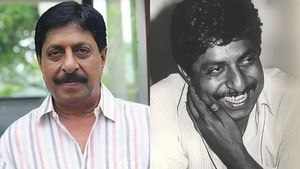 Sreenivasan Passes Away: Malayalam Cinema Mourns The Legendary Actor-Writer's Demise
 -
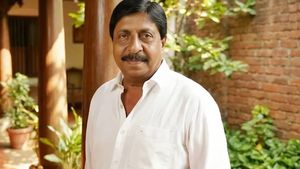 Malayalam Film Industry Loses A Defining Voice: Actor, Screenwriter And Director Sreenivasan Passes Away At 69
 -
 Happy Birthday Dheeraj Dhoopar: How A TV Set Friendship Turned Into Love With Wife Vinny Arora
 -
 Top Skin and Hair Concerns in India in 2025: What the Data Reveals
 -
 International Human Solidarity Day 2025: History, Significance, and Why It Matters
 -
 Purported Video of Muslim Mob Lynching & Hanging Hindu Youth In Bangladesh Shocks Internet
 -
 A Hotel on Wheels: Bihar Rolls Out Its First Luxury Caravan Buses
 -
 Bharti Singh-Haarsh Limbachiyaa Welcome Second Child, Gender: Couple Welcome Their Second Baby, Duo Overjoyed - Report | Bharti Singh Gives Birth To Second Baby Boy | Gender Of Bharti Singh Haarsh Limbachiyaa Second Baby


The Meditative Way Of Life-Part III

In other methods of meditation one is seeking to control the mind for a given period which is set apart for meditation. Here the goal is different. The usual methods are not successful because of the meditator is the mischief-maker. It is his shifting attention, which causes the thought flow, in which he himself gets mixed up in a trice as it were.
The Ramana way with its focus on understanding the mind enables the removal of obstructions, which must necessarily exist in the absence of such knowledge. Anything, which is understood, ceases to be a problem. The problem is seen to be our inability to stay focused on the centre of the mind. To prevent this clouding of attention by an army of thoughts Ramana provides an infallible weapon, self-enquiry.
When thoughts surface in meditation, as indeed they will, more so in the beginning, one has to enquire 'For whom is this thought?' There can be only one answer to this doubt. 'To me' That thought will die and there will be a gap before another surfaces. The words used advisedly are 'enquiry' and 'doubt'. For though it appears like a question it is only the mode in which this doubt is felt. It is only an enquiry based on an attitude of doubt. The doubt is whether the mind is what we have taken it to be, a separate entity. Take away the thoughts and see what is left.
No one needs worry that this process would be endless because thoughts seem to be on us in an ending succession. Ramana says it is like laying a siege to an enemy's fortress. Thoughts would starve to death for want of the individual's attention.
Then what about the survivor, the 'I' thought? Can it survive if its dependence on and association with other thoughts is cut off? The answer to this query depends on understanding certain basic differences between this 'I' thought and all other thoughts. Besides being the common thought it is the first thought to arise on waking. The first person pronoun 'I' must arise, before the second person 'you'; and third person 'They' can arise. If it surfaces on waking or, more accurately, if one wakes up only because thoughts have surfaced then the doubt arises as to what had happened to the thinker in deep sleep.
The 'I' would be seen to be only the waking 'I', not one that exists in all states on one's daily existence. In dream it could be different. In deep sleep it is not functioning. The characteristic of 'I' would be seen to be having a daily rising from some source and daily setting into it. As Ramana would say in deep sleep the mind gathers other thoughts, like the hen gathering its chicks under its wings, and going to roost at night. 'Whence am I'? Would be the doubt.
The question, which would arise, next is 'What is the nature of this source?' The answer is that it must be a conscious source; a source of strength, for one awakes after sound sleep rejuvenated and energised. The 'I' thought is also conscious because of the source from which it arises. But on rising it gets fragmented by its attention being scattered on innumerable thoughts to which it keeps paying attention. When this fragmentation ends through self-enquiry, the 'I' thought merges in its source automatically. Then one functions through an undivided, integral, mind which is pure because it is unpolluted by thoughts.


 Continue with Google