




 Click it and Unblock the Notifications


Latest Updates
-
 World Meditation Day 2025: Meditation Beyond The Mat, Simple Moments That Bring Inner Peace
 -
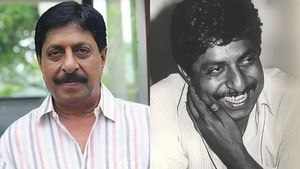 Sreenivasan Passes Away: Malayalam Cinema Mourns The Legendary Actor-Writer's Demise
 -
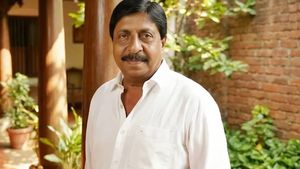 Malayalam Film Industry Loses A Defining Voice: Actor, Screenwriter And Director Sreenivasan Passes Away At 69
 -
 Happy Birthday Dheeraj Dhoopar: How A TV Set Friendship Turned Into Love With Wife Vinny Arora
 -
 Top Skin and Hair Concerns in India in 2025: What the Data Reveals
 -
 International Human Solidarity Day 2025: History, Significance, and Why It Matters
 -
 Purported Video of Muslim Mob Lynching & Hanging Hindu Youth In Bangladesh Shocks Internet
 -
 A Hotel on Wheels: Bihar Rolls Out Its First Luxury Caravan Buses
 -
 Bharti Singh-Haarsh Limbachiyaa Welcome Second Child, Gender: Couple Welcome Their Second Baby, Duo Overjoyed - Report | Bharti Singh Gives Birth To Second Baby Boy | Gender Of Bharti Singh Haarsh Limbachiyaa Second Baby
 -
 Bharti Singh Welcomes Second Son: Joyous News for the Comedian and Her Family


The Human Side Of Ramana


Burn away the dross
Illumine my sweet mother
And absorb her at your feet.
What need would there be, then for cremation?
Bhagavan Ramana.
The year is 1913. The scene is the Virupaksha Cave. Ramana's mother Azhagammal is on the threshold of death. Raging typhoid has brought her to the brink of it. At that time, she had not come to stay permanently with her son, the universal guru Ramana. That happened three years later. She had not yet become his disciple opening herself to his guidance. The crisis could have happened anywhere. But Arunachala chose to bring her to Virupaksha Cave at this crucial juncture to receive the care and protection of her ascetic son. So we have this poignant scene of a dying mother and a son Ramana, whose sole refuge was Arunachala.
In this situation Ramana turned spontaneously to Arunachala who was everything to him, mother, father, guru and master. We have in Ramana's prayer for his mother's recovery one of the most moving pieces of poetry expressing his love and gratitude to his mother and reminding Arunachala of his responsibility to make his mother Self-aware before death claimed her body.
This prayer is not only special in this sense but it also raises many fundamental questions for us to ponder over and to reflect about their true import. Who is born? Who dies? What is death of the body? What is death of the mind? What did Ramana mean when praying to Arunachala to make his mother's body a temple of God? While considering these issues one has to remember that according to Ramana one's true birth is only when one becomes steadily aware of one's own nature as fullness of consciousness, as the Self.
But we will not go into these questions now. For the human side of transhuman Ramana is best seen against this backdrop. There is so much misconception about how a jnani lives after him enlightenment, that one may fail to see that he is also the role model of human love as well. Ramana the man among men, was also more tender than one's own mother in all his relationships. Used as we are to give and take in each relationship, even with people whom we love, it is impossible for us to comprehend the overflowing, uncaused abundance of Ramana's love. One needs to be stone-hearted so as not to be moved by his loving care to each and everyone who has the rare blessing of coming within the ambit of his grace.
In this scene we have Ramana appealing to his guru Arunachala to save his mother from certain death. For one thing Ramana had lost his individuality in Arunachala and had therefore become totally dependent on its grace. Ramana knew only too well that Arunachala was the embodiment of Siva, the Yogi of Yogis, the ever enlightened one. Consequently he was certain that all siddhis (powers) were waiting on this perfected jnani. Also Siva has the reputation of being 'conqueror of death'. The lord of death dreads most Siva's powerful kick when he forgets Siva's protection of those who have surrendered to him unreservedly and totally.
About the author
Sri A.R.Natarajan has had the opportunity of a long association of over 50 years with the Ramanashram. He was the editor of "Mountain Path" for two years. He was the secretary of Ramana Kendra, New Delhi for ten years. He founded the Ramana Maharshi centre for learning, a non profit institution. He has authored more than thirty six books and eleven pocket books on the life and teachings of Bhagavan Ramana.
Chat With The Devotees Of Bhagwan Ramana Maharishi


 Continue with Google