




 Click it and Unblock the Notifications


Latest Updates
-
 The World’s First Harry Potter-Themed Hotel Is All Set to Open In Europe
 -
 Dhurandhar 16 Days Collection | Dhurandhar Beats Jawan, Stree 2 | Dhurandhar 500cr | Dhurandhar Day 16 Collection | Dhurandhar Box Office Collection Day 17 Prediction (December 21, 2025) | Dhurandhar Third Weekend Collection Prediction | Dhurandhar Today Collection
 -
 How to Dress Well This Holiday Season Without Overthinking It
 -
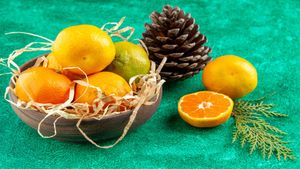 From Guava To Kiwi: Fruits to Have in Winters to Boost Your Immunity
 -
 David Guetta Returns to Mumbai After 8 Years, Lights Up Sunburn Festival 2025
 -
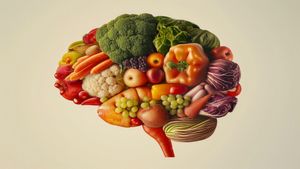 How Homeopathic Remedies May Support Gut and Brain Health, Expert Explains
 -
 Why Viral Fevers Are Lasting Longer This Year: Expert Explains The Immunity Shift Post-COVID
 -
 Rekha’s Timeless Wedding Season Style: 5 Things to Pick From Her Latest Look
 -
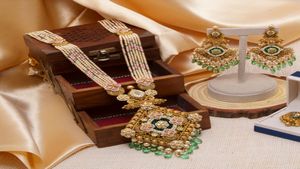 Gold Rate Today in India Flat, Silver Prices Jump to New High of Rs 2.14 Lakh: Check Latest Prices in Chennai, Bangalore, Hyderabad, Mumbai, Pune, Ahmedabad & Delhi
 -
 Happy Birthday Tamannaah Bhatia: What The 'Baahubali' Star's ‘Milky Beauty’ Skincare Looks Like Off Screen


Sai Sat Charitra - Chapter 11 - Part II

Dr. Pandit's Worship
One Dr. Pandit, a friend of Tatyasaheb Noolkar, once came to Shirdi for Baba's darshan. After saluting Baba, he stayed in the Masjid for some time. Baba asked him to go to Dadabhat Kelkar. He went to Dadabhat, by whom he was well received. Then Dababhat left his house for Puja and Dr. Pandit accompanied him. Dadabhat worshipped Baba. Nobody until then dared to apply sandal paste to Baba's forehead. Only Mhalsapati used to apply it to His throat. But this simple-hearted devout, Dr. Pandit, took Dabadhat's dish containing Puja-materials and taking sandal-paste out of it, drew a Tripundra, i.e. there horizontal lines on Baba's forehead. To the surprise of all, Baba kept silent without uttering a single word.
Dababhat that evening asked Baba, "How is it, that though you object to the sandal-paste being applied by others to your forehead, but you allowed Dr. Pandit to do so now?" Baba replied that Dr. Pandit believed Him to be the same as his Guru, Raghunath Maharaja of Dhopeshwar, known as Kaka Puranik, and he applied the paste to His forehead, as he was doing to his Guru. Hence He could not object. On enquiry, Dr. Pandit told Dadabhat that he took Baba as his Guru Kaka Puranik, and hence he marked the Tripundra on Baba's forehead, as he did on his Guru's.
Though Baba allowed the devotees to worship Him as they pleased, still sometimes, He acted in a strange way. Sometimes, He threw away the Puja-dish and was wrath incarnate, then who could approach Him? Sometimes, He scolded the devotees, at times; He looked softer than wax, a statue of peace and forgiveness. Though He seemed to shake with anger and His red eyes rolled round and round, still, He was internally a stream of affection and motherly love. Immediately, He called out His devotees and said, that was He ever angry with His devotees? That if mothers kicked their children and if the sea turned back the rivers, He would neglect the devotees' welfare: that He, the slave of His devotees, always stood by them, and responded to them, whenever they called upon Him, and that He always longed for their love.
Sai Ram. While it is true that Baba respected the feelings of His devotees and allowed them to worship Him as they pleased. If Baba reacted otherwise to devotees' pooja, it was not against them but against their pomposity and falsehood that were the resultants of their ego. Where the devotee was true to His own Sadguru, Baba accepted the disciple as His own thus establishing His oneness with all other Gurus.
The Individual Self is a part of the Universal Self (Jeevatma is an amsa of Paramatma). Just as a drop of water, a lake, a river and the ocean, all are made of the same water, so whether a small child, a grown up man, woman, a Brahmin or a Sudra, all are containers for the same essence, that of Brahman, also called as ParaBrahman to differentiate from Brahma, the God of Creation. Most of us are deluded by Maya, illusion, which prevents us from seeing things as they really are. Just as in semi-darkness, a rope is mistaken for a snake and produces fear in the eyes of the onlooker, the sense of I, also called ego, produces a sense of separation in us, thus limiting our perceptions and also causing various attachments and aversions (which are negative attachments).
Just as a good lamp makes us see the rope for what it is and thus be free from fear, the Guru's grace also removes in us the sense of separation and thus frees us from the attachments of the world. The oneness of all is demonstrated in the various incidents described in Satcharitra and Dr.Pandit's worship of Baba.
Sai Ram. Baba did not believe in teaching through elaborate theoretical discourses (though He makes this child of His, me, do that sort of things!), but through practical lessons. He made a few exceptions like the Chapter on Brahmagnan, which we will eventually explore.
Though Baba did not care for theoretical explanations, He, like a fond parent, did explain His actions when genuine aspirants among His devotees asked Him to explain. That is what He did in this case too.
Baba was demonstrating time and again the oneness of the universal spirit, which is manifested in the whole creation. The Spirit has no shape, no size, no form, no attributes of color, sex etc which is the nirgun state. Thus we can refer to that Nirgun ParaBrahman as He, She or It. When it decided to manifest, that is to take some form, it took various shapes, sizes, colors, textures etc. But the underlying essence of all of them is the formless self since it is inexhaustible. That is why; Sri Vishnu Sahasranama describes Him as the universe and the universal Spirit. Sai Ram.
Sai showed that the Gurus, deities and the saints are all one. Sarva Deva Namaskarah Kesava Praticgachhati (all Namskars reach Kesava). Bhagawan Sri Krishna tells Arjuna that people worship so many different Gods, Pitrus etc., but since He is present in all of them, He accepts their worship through different deities.
And Sai always respected that simplicity of a child and not the artificial humility of a devotee who keeps bowing his head over and over again secretly hoping for some desires to be fulfilled by such sycophantic behaviour.
This incident was used by Baba to reinforce time and again the lesson which He so patiently taught to look beyond the externalities of size, shape and other external characteristics and not be bound by the limited sensory perceptions of sight, sound etc and to allow the heart to get connected to the universal Spirit to experience the unity.


 Continue with Google