




 Click it and Unblock the Notifications


Latest Updates
-
 Mahayuti Sweeps Maharashtra Local Body Polls, BJP Emerges Largest Party
 -
 The World’s First Harry Potter-Themed Hotel Is All Set to Open In Europe
 -
 Dhurandhar 16 Days Collection | Dhurandhar Beats Jawan, Stree 2 | Dhurandhar 500cr | Dhurandhar Day 16 Collection | Dhurandhar Box Office Collection Day 17 Prediction (December 21, 2025) | Dhurandhar Third Weekend Collection Prediction | Dhurandhar Today Collection
 -
 How to Dress Well This Holiday Season Without Overthinking It
 -
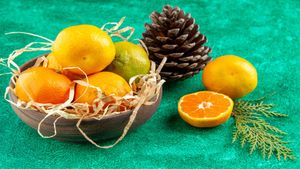 From Guava To Kiwi: Fruits to Have in Winters to Boost Your Immunity
 -
 David Guetta Returns to Mumbai After 8 Years, Lights Up Sunburn Festival 2025
 -
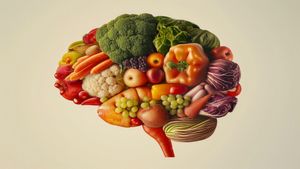 How Homeopathic Remedies May Support Gut and Brain Health, Expert Explains
 -
 Why Viral Fevers Are Lasting Longer This Year: Expert Explains The Immunity Shift Post-COVID
 -
 Rekha’s Timeless Wedding Season Style: 5 Things to Pick From Her Latest Look
 -
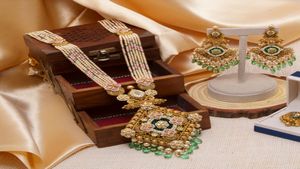 Gold Rate Today in India Flat, Silver Prices Jump to New High of Rs 2.14 Lakh: Check Latest Prices in Chennai, Bangalore, Hyderabad, Mumbai, Pune, Ahmedabad & Delhi


Spiritual Gems from Sai Satcharita Chapter - 1, Part 2

After describing in brief the various modes of devotion according to Parashara, Vyasa and Shandilya etc., the author goes on to relate the following story:
"It was sometime after 1910 A.D. that I went, one fine morning, to the Masjid in Shirdi for getting a darshan of Sai Baba. I was wonder-struck to see the following phenomenon. After washing His mouth and face, Sai Baba began to make preparations for grinding wheat.
Sai Ram. In 2003, when this article was originally written, I used to regularly recite Aditya Hridayam (a Stotra in praise of Sri Sun God, Surya, also called popularly as Suryanarayana, signifying His oneness with Narayana, the Para Brahma, and the origin of this whole Universe. This particular Stotra is a part of Sri Ramayana composed by that great Sage, Sri Valmiki, who was a hunter earlier. His transformation was effected through the great Ram Naam. Sage Agastya, gives the physical Rama, the Hridayam (the inner core, the heart) of Aditya (Sun) (the Atma Ram, the True Self) and assures Sri Rama that if He worships Sun God, i.e. understands the true nature of Atma, Self, He will be sure to conquer Ravana, the Ten-headed Rakshasa (our five body organs and five sense organs). Sri Rama too, worships Aditya after doing Achamanam three times (Trirachamya Suchirbhutva... says Aditya Hridayam, which can also be interpreted as cleaning body, mind and intellect). It is a common feature in all Hindu rituals to start any Puja, Yagna or Yaga (all Good Deeds) with Achamanam, i.e. cleaning oneself physically, mentally and spiritually by washing one's hands and sipping water three times. So, Sri Sai also did Achamanam before His yogic ritual of grinding wheat, before His fight against the Cholera! Sai Ram.
He spread a sack on the floor; and thereon set a hand-mill. He took some quantity of wheat in a winnowing fan, and then drawing up the sleeves of His Kafni (robe); and taking hold of the peg of the hand-mill, started grinding the wheat by putting a few handfuls of wheat in the upper opening of the mill and rotated it. I thought 'what business Baba had with the grinding of wheat, when He possessed nothing and stored nothing, and as He lived on alms!'
Sai Ram. Every act need not have a selfish motive and can be for universal welfare. Baba had no earthly business. His business (Busy ness!) was spiritual, to bring all of us to the path of the spirit. He believed and practiced Nishkama Karma to set an example to all of us. Sai Ram.
Some people who had come there thought likewise, but none had the courage to ask Baba what He was doing. Immediately, this news of Baba's grinding wheat spread into the village, and at once men and women ran to the Masjid and flocked there to see Baba's act. Four bold women, from the crowd, forced their way up and pushing Baba aside, took forcibly the peg or handle into their hands, and, singing Baba's Leelas, started grinding. At first Baba was enraged, but on seeing the women's love and devotion, He was much pleased and began to smile.
Were the women the four directions of the village? Were the bodies of four ordinary simple devoted village women taken over momentarily by the Grama Devatas, the Village ruling deities? Who but Sai will know?
"He was much pleased and began to smile." Because He knew the past, present and the future and since He knew very shortly how the drama was going to unfold.


 Continue with Google