




 Click it and Unblock the Notifications


Latest Updates
-
 World Meditation Day 2025: Meditation Beyond The Mat, Simple Moments That Bring Inner Peace
 -
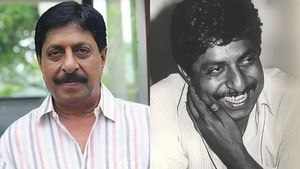 Sreenivasan Passes Away: Malayalam Cinema Mourns The Legendary Actor-Writer's Demise
 -
 Malayalam Film Industry Loses A Defining Voice: Actor, Screenwriter And Director Sreenivasan Passes Away At 69
 -
 Happy Birthday Dheeraj Dhoopar: How A TV Set Friendship Turned Into Love With Wife Vinny Arora
 -
 Top Skin and Hair Concerns in India in 2025: What the Data Reveals
 -
 International Human Solidarity Day 2025: History, Significance, and Why It Matters
 -
 Purported Video of Muslim Mob Lynching & Hanging Hindu Youth In Bangladesh Shocks Internet
 -
 A Hotel on Wheels: Bihar Rolls Out Its First Luxury Caravan Buses
 -
 Bharti Singh-Haarsh Limbachiyaa Welcome Second Child, Gender: Couple Welcome Their Second Baby, Duo Overjoyed - Report | Bharti Singh Gives Birth To Second Baby Boy | Gender Of Bharti Singh Haarsh Limbachiyaa Second Baby
 -
 Bharti Singh Welcomes Second Son: Joyous News for the Comedian and Her Family


Narak Chaturdashi 2025, 19 Or 20 October? Know Chhoti Diwali Date, Time, Rituals, Mantras, And Significance

Every year, in the silent hours before dawn, a sacred ritual unfolds - one that is meant to cleanse our souls, dispel deeply rooted fears, and affirm that light always outlasts darkness.
Narak Chaturdashi, also known as Chhoti Diwali or Roop Chaudas is observed, during the Chaturdashi tithi of Krishna Paksha.

The heart of this observance lies in the abhayaṅ snān - the oil bath taken at the cusp of moonrise when the Chaturdashi tithi remains active. This ritual bath is believed to liberate devotees from the grip of hellish energies (naraka), purify the body and mind, and restore spiritual balance.
But Narak Chaturdashi is more than timings and rituals It reminds us that the darkest moments are often the prelude to dawn. Let us know in detail about this auspicious day.
Narak Chaturdashi 2025: Date And Time
In 2025, Narak Chaturdashi will be observed on Monday, October 20. Several trusted festival calendars confirm this alignment.
The Chaturdashi tithi begins on October 19 at 1:51 PM and ends on October 20 at 3:44 PM. Any ritual that depends on this tithi - especially the pre-sunrise bath - must be done while this tithi is active.
The Abhyang Snan (oil bath) muhurat is set in the early pre-dawn hours: from 04:23 AM to 05:35 AM. Devotees are urged to bathe during moonrise within this window, as it is considered the most potent spiritual interval.
In some sources, slightly different muhurats are cited (for example, 05:16-06:27 AM) depending on locality.
Always check your local panchang or temple calendar before ritual.
Narak Chaturdashi 2025: Puja Rituals
The central ritual of Narak Chaturdashi is the Abhyang Snan. In the dark pre-dawn, devotees massage their entire body and head with fragrant oils or medicated oil blends (often sesame or Ayurvedic preparations).
This massage is followed by an ubtan (herbal paste) applied to the body, and then the sacred bath. This ritual is thought to destroy the influence of evil and purify the physical and subtle layers of a person.
Beyond the oil bath, devotees dress in clean, preferably new clothes, and often apply kajal or kohl to eyes - a symbol of warding off the evil eye.
In many households, lights, diyas, and lamps are lit in the evening of Chaturdashi to symbolize the triumph of light over darkness. Offerings and prayers are made to Goddess Lakshmi and Lord Krishna. In some regions, Yama (God of Death) is honored, with lamps (Yama Deep) lit to seek protection from premature death.
In parts of Western India, the festival is referred to as Kali Chaudas or Bhoot Chaturdashi, and additional rituals for honoring ancestors and protector spirits are observed.
Special prasad and offerings - like rice flakes, sesame seeds, jaggery, flowers, and sweets - are prepared and distributed among family and guests. Some families also perform alms or charity on this day.
Narak Chaturdashi 2025: Mantras To Chant
Mantras form the sacred thread of energy through which the rituals connect to the divine. During the Abhyang Snan or after the bath, devotees may chant:
- "ॐ नरक्नीवॄणाय नमः" (Om Narak Nivaranaya Namah)
This invocation seeks the removal of the forces of Naraka (hellish suffering).
- "ॐ भगवते श्रीकृष्णाय नमः" (Om Bhagavate Shri Krishnaya Namah)
This mantra invokes Lord Krishna, who defeated the demon Narakasura and ushered in liberation.
-
In
some
traditions,
reciting
the
Hanuman
Chalisa
or
chanting
Maha
Mrityunjaya
Mantra
is
encouraged
on
this
day
for
added
protection
and
renewal.
- When lighting the Yama Deep (lamp for Lord Yama) in the evening, one may chant
"ॐ यमाय नमः" or "ॐ यम देवाय नमः" (Om Yam Devaya Namah) to seek longevity and protection from untimely death.
- If performing Lakshmi puja, common mantras like "ॐ लक्ष्म्यै नमः" (Om Lakshaye Namah) or "श्रीं ह्रीं श्रीं क्लीं महालक्ष्म्यै नमः" are appropriate.
Local family, regional or guru traditions may prescribe additional specific mantras.
Narak Chaturdashi 2025: Significance
At its heart, Narak Chaturdashi celebrates the victory of good over evil. It recalls the divine tale of Lord Krishna and Satyabhama slaying the demon Narakasura, who had terrorized the heavens and earth, enslaving many. This triumph is symbolic: it reminds us that even in darkness, justice and light will prevail.
By performing the early morning oil bath, devotees symbolically wash away inner impurities, negative karma, fear, and obstacles. It is a poised act of renewal and rebirth, enabling a fresh spiritual beginning.
Lighting lamps and offering prayers embody the illumination of knowledge over ignorance, dispelling spiritual darkness in one's life and surroundings. Honoring Yama (in some traditions) seeks to appease cosmic justice and protect against untimely departure.
For many, the day is considered an important gateway into Diwali - the cleansing of internal and external energies before invoking prosperity, peace, and blessings.


 Continue with Google