




 Click it and Unblock the Notifications


Latest Updates
-
 Bharti Singh-Haarsh Limbachiyaa Welcome Second Child, Gender: Couple Welcome Their Second Baby, Duo Overjoyed - Report | Bharti Singh Gives Birth To Second Baby Boy | Gender Of Bharti Singh Haarsh Limbachiyaa Second Baby
 -
 Bharti Singh Welcomes Second Son: Joyous News for the Comedian and Her Family
 -
 Gold & Silver Rates Today in India: 22K, 24K, 18K & MCX Prices Fall After Continuous Rally; Check Latest Gold Rates in Chennai, Mumbai, Bangalore, Hyderabad, Ahmedabad & Other Cities on 19 December
 -
 Nick Jonas Dancing to Dhurandhar’s “Shararat” Song Goes Viral
 -
 From Consciousness To Cosmos: Understanding Reality Through The Vedic Lens
 -
 The Sunscreen Confusion: Expert Explains How to Choose What Actually Works in Indian Weather
 -
 On Goa Liberation Day 2025, A Look At How Freedom Shaped Goa Into A Celebrity-Favourite Retreat
 -
 Daily Horoscope, Dec 19, 2025: Libra to Pisces; Astrological Prediction for all Zodiac Signs
 -
 Paush Amavasya 2025: Do These Most Powerful Rituals For Closure On The Final Amavasya Of The Year
 -
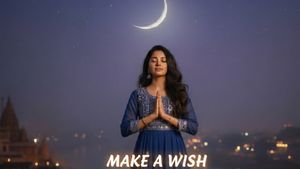 As The Last New Moon Of 2025 Approaches, Make A Wish Based On Your Rising Sign


From Folklore To Film: Understanding The Bhoot Kola Ritual Through Kantara

When Rishab Shetty's Kantara hit the screens, audiences were not only captivated by its gripping story and stunning visuals but also introduced to the mystical and centuries-old ritual of Bhoot Kola. Rooted deeply in the coastal regions of Karnataka, and also practiced in parts of Kerala, this ritual is a fascinating blend of devotion, tradition, and community celebration.

What is Bhoot Kola?
Bhoot Kola, sometimes referred to as Daiva Kola, is a ritualistic performance dedicated to local spirits or divine entities called Daivas. Unlike mainstream religious practices, this ritual is deeply entwined with the folklore of Tulu Nadu, encompassing regions like Mangalore, Udupi, and coastal Kerala.
The word "Bhoot" here does not refer to ghosts in the modern sense, but rather to spirits revered as protectors of villages and families.
The ritual serves multiple purposes: thanking the divine, seeking blessings, resolving disputes, and ensuring prosperity. In many families, it is considered essential to perform Bhoot Kola during auspicious occasions such as marriages, housewarming ceremonies, or significant milestones.
When And Where Is it Performed?
Bhoot Kola does not have a fixed calendar date. It is performed as per family needs or village traditions. If an event or family duty requires divine blessings, a Bhoot Kola is conducted immediately. This makes the ritual flexible and intimately tied to the lives of the people practicing it.
Geographically, the ritual is most prominently observed in coastal Karnataka-Mangalore, Udupi, Ligurthi-and parts of Kerala. Traditionally, it is more common in villages, where local culture and ancestral beliefs hold strong.
The Ritual: A Dance Of The Divine
The performance is a visual spectacle. A trained priest or performer, often in a trance-like state, embodies the spirit of the Daiva. Through intricate dances, songs, and symbolic gestures, the performer conveys the spirit's blessings, warnings, or messages.
Villagers gather around, observing and participating, creating a sense of community cohesion and shared spirituality.
Food offerings form an integral part of the ritual, though they vary from spirit to spirit. Some Daivas require the sacrifice of a raw hen, offering its blood as a sacred tribute. Others may have simpler offerings. These practices, while seemingly intense, are deeply symbolic, representing devotion, respect, and a connection with the spiritual realm.
Bhoot Kola In Kantara
Kantara brought Bhoot Kola to mainstream audiences, showing the vibrancy, mysticism, and intensity of this ritual. The film accurately portrays how villagers perform the ritual, the intricate costumes, and the trance-like possession of the performer. Beyond entertainment, it sparks curiosity about regional traditions and ancient practices often unknown to urban audiences.
By showcasing Bhoot Kola, the film also highlights the coexistence of folklore with daily life. These rituals are not just historical relics-they continue to influence family decisions, local governance, and cultural identity in villages.

The
ritual
is
a
living
example
of
how
folk
traditions
preserve
history,
culture,
and
spiritual
beliefs.
Beyond
devotion,
Bhoot
Kola
serves
as
a
medium
to
maintain
social
harmony,
resolve
conflicts,
and
celebrate
milestones
collectively.
It
reflects
a
worldview
where
the
divine
is
immediate,
accessible,
and
deeply
intertwined
with
everyday
life.
Moreover,
rituals
like
Bhoot
Kola
highlight
the
diverse
spiritual
landscape
of
India,
which
goes
far
beyond
mainstream
temples
and
festivals.
They
remind
us
that
spirituality
can
be
performative,
communal,
and
profoundly
symbolic.


 Continue with Google