




 Click it and Unblock the Notifications


Latest Updates
-
 World Saree Day 2025: From Fusion To Heritage, The Saree Trends That Ruled The Year
 -
 SIR Draft Electoral Rolls Out In West Bengal, Gujarat, Tamil Nadu: How Voters Can Check SIR Form Submission Status Online?
 -
 Gold Rate In India Crash By Rs 12,000 From Record: Will 24K, 22K, 18K Gold Prices Rise Or Fall In Christmas Week? Gold & Silver Prediction Here
 -
 20th or 21st December? When Is the Winter Solstice In 2025 And How Is It Different From Meteorological Winter
 -
 ‘Clean Air Is a Right, Not a Luxury’: ZONAIR3D Unveils India Expansion Plans
 -
 World Meditation Day 2025: Meditation Beyond The Mat, Simple Moments That Bring Inner Peace
 -
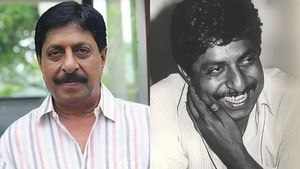 Sreenivasan Passes Away: Malayalam Cinema Mourns The Legendary Actor-Writer's Demise
 -
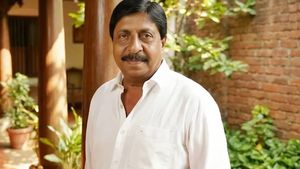 Malayalam Film Industry Loses A Defining Voice: Actor, Screenwriter And Director Sreenivasan Passes Away At 69
 -
 Happy Birthday Dheeraj Dhoopar: How A TV Set Friendship Turned Into Love With Wife Vinny Arora
 -
 Top Skin and Hair Concerns in India in 2025: What the Data Reveals


Mudiya Purnima 2022: Date, History, Significance And Celebrations

Mudiya Purnima or Mudiya Puno festival is celebrated in commemoration of the death anniversary of Shrila Sanatan Goswami Pada who lived around 500 years ago. Mudiya means 'mundan', or shaving of the head, and 'Puno' means 'Purnima'. It is celebrated on Guru Purnima, the day on which Sanatan Ji attained Mahasamadhi. Sanatan Goswami (1488 AD -1558 AD) was the eldest of the Six Goswamis, and he was believed to be the reincarnation of Radharani's friend or sakhi Lavang Manjari. For more interesting details, go through the article.

Mudiya Purnima 2022: Date
Mudiya Purnima is celebrated on Guru Purnima Day on 13 July 2022.
Mudiya
Purnima
2022:
History
Sanatan
Goswami
(1488
AD
-1558
AD)
was
the
leading
disciple
of
Chaitanya
Mahaprabhu.
He
worked
miracles
and
led
philanthropic
activities
in
Vrindavan,
His
four
books
serve
as
four
cornerstones
for
Gaudiya
establishment
and
tradition.
Sanatan
belonged
to
a
south
Indian
brahmin
family
that
was
born
and
brought
up
in
Bengal.
While
young,
they
worked
for
ruler
Hussain
Shah
and
were
forced
to
wear
Islamic
robes.
He
was
also
nicknamed
Sakar
Malik
at
that
time.
Sanatan
knew
several
languages,
but
he
was
completely
immersed
in
his
love
for
Radha
Krishna.
He
used
to
indulge
in
Harinam,
read
scriptures
and
meditate
without
anyone's
knowledge.
During
the
day
he
was
at
shah's
court
and
at
night,
at
his
village,
Ramkeli
which
he
used
to
assume,
was
Lord
Krishna's
Brindavan.
Once the brothers met Chaitanya Mahaprabhu and were absorbed into his panth or fold. They were renamed Sanatan Goswami and Roop Goswami. He also was thrown into jail because he stopped working for the Muslim King but soon he found his way out of jail by bribing the guard. Sanatan left for Vrindavan, made it his permanent residence and stayed there, illuminating the lives of Brajvasis. He lived at Dwadash Aditya Tila, the place where Radha met Krishna for the first time. He performed Madhukari by collecting food from people and lived in a simple hermitage. One day while performing Madhukari he accidentally met with a great Krishna Bhakta, by the name Madan Mohan, whom Sanatan did not recognize as such but later, realized it from Lord Krishna in a dream visitation. Madan Mohan chose to become Sanatans close friend and disciple.
Sanatan performed several miracles thereafter. Sanatan Goswami entered mahasamadhi on the Guru Purnima, and thereafter this day was recognized as Mudiya Puno, or Mudiya Purnima in Braj. Puno means Purnima and mudiya means the process of shaving the head. This was so because all the brajwasis, after Sanatans death, felt orphaned and shaved their heads to signify bereavement and performed Govardhan parikrama in his memory. Out of Sanatans four books, the masterpiece was the book of Brihad Bhagwatmritam. In summer, as the Vrindavan gets very hot, the devotees devise some ways to keep Radha and Krishna cool and comfortable. So, they conduct Jal Yatra. On the evening of Jyestha Purnima, a fountain-like structure is installed on Radhas chowki and Radha and Krishna are bathed in Yamuna water. A Kalpavriksh is arranged on the chowki. Krishna is decked with white dhoti.
Mudiya Purnima 2022: The Celebrations
Mudiya is a five-day festival that starts on Ashadha Navami. Mudiya procession is marked by the exuberance and an overwhelming spirit of celebration. The Mudiya saints go around dancing, singing, and wearing their traditional robes. The sound of the chimes and songs blend in perfect rhythm, infused with the intoxicating elixir of Lord Krishna's love and sankeertan. Devotees from all over the country have already headed to Govardhan at this time, together, in hordes.
This time, the procession will be conducted as usual on guru Purnima and the very next day, the entire Girirajji's Braj Vasundhara witnesses the vibrant culture of Mudiya charged by the devotional fervour and frenzy. As the sounds of the sweet tinkling chime rent the air, it is Mahant Ramakrishna Das of Radha Shyam Sundar temple and in the evening, the Mahant Gopal Das of Mahaprabhu temple begins to lead the mudiya procession. Sur music and tradition are at their resonant best here that captivate the hearts of the crowds of mudiya devotees. To be an involved part of this occasion, scores of people visit Uttar Pradesh from other states.
During the mudiya Shobha yatra, which starts at 10 am, in the morning, Gaudiya saints will go around the Mansi Ganga and the sankeertan along with the airing of the film about Sanatan Goswami heightens the excitement in Bhakthas. The saints, jump around, in attractive folk attires and go around the Manasi Ganga, chanting harinam all the way.
According to Mudiya Sant Gopal Das, it was the arrival of the revered Sanatan Goswami of the Gaudiya sect in Goloka Dham in 1556, till date, that made him go through the circumambulating ritual on Mudiya Purnima. They shave their heads, in remembrance of Sanatanji and secondly a Shobha yatra is taken out and the devotees soaked in their profound feelings for Krishna and Sanatan, bring the event to a close at night. Even under British rule, the Mudiya fair had not stopped being celebrated.
Mudiya
Purnima
2022:
The
Dhio-Dhio
Festival
The
Dhio
Dhio
festival
is
one
more
typical
byproduct
of
Gaudiya
Vaishnava
culture.
It
also
finds
a
mention
in
the
Vrindavan
Dhamanuragavali
manuscripts.
FS
Grouse,
who
was
the
District
Magistrate
of
Mathura
under
British
rule,
has
mentioned
this
in
his
booklet.
Parikrama
of
Govardhan
walking
around
the
mountain,
bathing
in
Manasa
Ganga
and
then
visiting
the
temple
and
Mukharvind
and
Danghati
spots
are
the
chief
features
of
this
annual
ritual.
Mudiya
Purnima
parikrama
was
the
concept
of
Sanatana
Goswami.
Disclaimer: The information is based on assumptions and information available on the internet and the accuracy or reliability is not guaranteed. Boldsky does not confirm any inputs or information related to the article and our only purpose is to deliver information. Kindly consult the concerned expert before practising or implementing any information and assumption.
Image sources: Wikimedia Commons


 Continue with Google