




 Click it and Unblock the Notifications


Latest Updates
-
 ‘Clean Air Is a Right, Not a Luxury’: ZONAIR3D Unveils India Expansion Plans
 -
 World Meditation Day 2025: Meditation Beyond The Mat, Simple Moments That Bring Inner Peace
 -
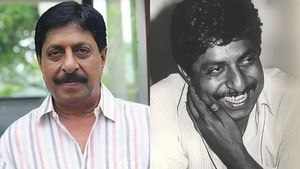 Sreenivasan Passes Away: Malayalam Cinema Mourns The Legendary Actor-Writer's Demise
 -
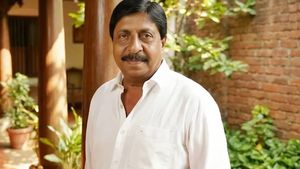 Malayalam Film Industry Loses A Defining Voice: Actor, Screenwriter And Director Sreenivasan Passes Away At 69
 -
 Happy Birthday Dheeraj Dhoopar: How A TV Set Friendship Turned Into Love With Wife Vinny Arora
 -
 Top Skin and Hair Concerns in India in 2025: What the Data Reveals
 -
 International Human Solidarity Day 2025: History, Significance, and Why It Matters
 -
 Purported Video of Muslim Mob Lynching & Hanging Hindu Youth In Bangladesh Shocks Internet
 -
 A Hotel on Wheels: Bihar Rolls Out Its First Luxury Caravan Buses
 -
 Bharti Singh-Haarsh Limbachiyaa Welcome Second Child, Gender: Couple Welcome Their Second Baby, Duo Overjoyed - Report | Bharti Singh Gives Birth To Second Baby Boy | Gender Of Bharti Singh Haarsh Limbachiyaa Second Baby


Sri Ganapati-Vinayaka-Part I


Ganapati is said to have two spouses, Buddhi (Intellect) and Siddhi (Achievement). Thus He is the Master of Knowledge and Achievement.
In this characterisation Sri Ganapati represents a possessor of Perfect Wisdom, and a Fully - Realised Vedantin. Westerners are shocked to notice that Hindus revere a divine form which to them seems quite absurd. But the Elephant-Headed Lord indeed represents the highest and the best that have ever been given in our Scriptures. To a Vedantic student, since his "path of Knowledge" is essentially intellectual, he must have a great head to conceive and understand the logic of Vedantic thought and, in fact, the truth of Vedanta can be comprehended only through listening to a teacher and, therefore, 'Sravana' (listening) is the initial stage to be mastered by the new initiate.
Therefore, Sri Ganapati has large ears representing continuous and intelligent listening to the Teacher.
After "listening" (Sravana) to the truths of the Upanishads, the Vedantic student must independently "reflect" (Manana) upon what he has heard, for which he needs a sensitive intelligence with ample sympathy to discover in himself sufficient accommodation for all living creatures in the universe.
His intellect must have such depth and width in order to embrace in his vision the entire world of plurality. Not only must he, in his visualisation, embrace the whole cosmos, but he must have the subtle discriminative power(Viveka) in him to distinguish the changing, perishable, matter-vestures from the Eternal, Immutable, All-Pervading Consciousness, the Spirit. This discrimination is possible only when the intellect of the student has consciously cultivated this power to a large degree of perfection.
The trunk, coming down the forehead of the elephant-face, has a peculiar efficiency and beats all achievements of man and his ingenuity in the mechanical and scientific world. Here is a "tool" which can at once uproot a tree or pick up a pin from the ground. The elephant can lift and pull heavy weights with his trunk and, at the same time, it is so sensitive at its tip that the same instrument can be employed by the elephant to pluck a blade of grass. The mechanical instruments cannot have this range of adaptability. The spanner that is used for tightening the bolts of a gigantic wheel cannot be used to repair a lady's watch.
Like the elephant's trunk, the discriminative faculty of an evolved intellect should be perfect so that it can use its discrimination fully in the outer world for resolving gross problems and, at the same time, efficiently employ its discrimination in the subtle realms of the inner personality layers.
The discriminative power in us can function only where there are two factors to discriminate between; these two factors are represented by the tusks of the elephant as the trunk is between them. Between good and evil, right and wrong, and all other dualities must we discriminate and come to our own judgement and conclusions in life, Sri Vinayaka is represented as having lost one of His tusk in a quarrel with Parasurama, a great disciple of Lord Shiva. This broken tusk indicates that a real Vedantic student of subjective experience is one who has gone beyond the pairs -of -opposites (dwandwaatita).
To be continued


 Continue with Google