




 Click it and Unblock the Notifications


Latest Updates
-
 Gold Rate In India Crash By Rs 12,000 From Record: Will 24K, 22K, 18K Gold Prices Rise Or Fall In Christmas Week? Gold & Silver Prediction Here
 -
 20th or 21st December? When Is the Winter Solstice In 2025 And How Is It Different From Meteorological Winter
 -
 ‘Clean Air Is a Right, Not a Luxury’: ZONAIR3D Unveils India Expansion Plans
 -
 World Meditation Day 2025: Meditation Beyond The Mat, Simple Moments That Bring Inner Peace
 -
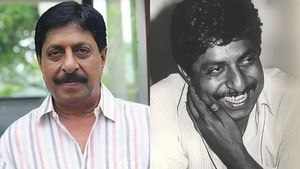 Sreenivasan Passes Away: Malayalam Cinema Mourns The Legendary Actor-Writer's Demise
 -
 Malayalam Film Industry Loses A Defining Voice: Actor, Screenwriter And Director Sreenivasan Passes Away At 69
 -
 Happy Birthday Dheeraj Dhoopar: How A TV Set Friendship Turned Into Love With Wife Vinny Arora
 -
 Top Skin and Hair Concerns in India in 2025: What the Data Reveals
 -
 International Human Solidarity Day 2025: History, Significance, and Why It Matters
 -
 Purported Video of Muslim Mob Lynching & Hanging Hindu Youth In Bangladesh Shocks Internet


Adbhutanath Shiva And The Miracle Of Living!


Rajasthan speaks of poetry, and Mewar speaks valor, self respect and death with honor. Mewar, the name, makes one breathe in deep, to just listen to the galloping horse hoofs of Rana Kumbha who dashed down the fort to meet the Mughals at the bottom of the plateau. In the air, one can still listen to the bhajans of Mira Bai as she sang her heart out to Krishna. Mewar also echoes the shrikes of women who burnt themselves in Jauhar. Within these very fort walls, in the exquisitely carved temple of Sammidheshwar lies this form of Adbhutanata Shiva.
Adbhutanath Shiva can be perceived in a few ways. This depiction of a three headed deity was last heard of as Shiva Trimurti at Elephanta where the Vakatakas had sculpted Him out exquisitely early in the 5th century AD. Later He has been profusely sculpted in another varient with the same symbolism as Trimurti embedded within the Nataraja by the Cholas in the 8th cen AD, with the creator, preserver and the destroyer appearing as the Damaru (creation) held in the left hand and the fire bowl (destruction) in the right, on either side of the Lord Nataraja. Trimurthi is the name given to any form of Lord Shiva that displays Vamadeva (feminine, endearing), Isana Shiva and Aghora(fierce) simultaneously but these representations are also numbered. Alternatively he is depicted with Brahma and Vishnu. He appears in the Sammidheshwar temple in the 6th cen A.D as Adbhutanata alias Trimurthi possibly.
Another
way
to
perceive
Him
is
to
realize
his
essence
as
a
epitome
of
perfection
in
the
temple
within
which
He
resides.
The
outside
of
the
Sammidheshwar
temple
is
laced
in
marble
with
exquisite
shikharas
rising
up
to
the
Kalash
(pot).
As
the
walls
rise
high,
finely
carved
with
sculpture
of
Gods,
Goddesses
and
Kanyas,
the
inside
of
the
temple
is
a
passage
opening
into
a
cool,
hollow
dimly
lit
room
open
to
the
roof
rising
high
up.
This
is
a
well
lit
interior,
the
walls
of
which
appear
strong
and
solid
unlike
their
delicate
appearance
on
the
outside.
Read about the awe inspiring form of the deity on the Next Page


 Continue with Google