




 Click it and Unblock the Notifications


Latest Updates
-
 Daily Horoscope, Dec 29, 2025: Libra to Pisces; Astrological Prediction for all Zodiac Signs
 -
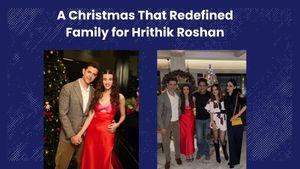 Hrithik Roshan, Saba Azad, Sussanne Khan and the Kids Celebrate Christmas Together, Win Hearts Online
 -
 Why Everyone Online Is Obsessed With the Japanese Hair-Washing Method
 -
 Silver Rate in India Jumps Rs 37,000 in Week; Silver Price Today Hits Rs 2.51 Lakh/kg in Mumbai, Delhi & More; Check Rates in Chennai, Bangalore, Hyderabad, Pune & Other Cities
 -
 A New Year Resolution For Childhood Wellness: What 2025 Taught Parents and Doctors
 -
 “Always On”: Expert Explains The Mental Toll of Living in a Constantly Connected World
 -
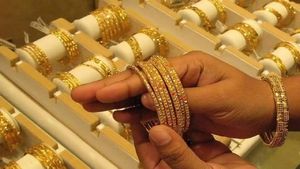 Rally in Gold Rate Today in India Continues! 24K Gold Prices Jump Rs 70,400 Per 100 gm in a Week: Check Latest 22K & 18K Prices; Bangalore, Mumbai, Hyderabad, Chennai Gold Rate Today With Other Cities
 -
 Holiday Feasts, Balanced Living: Everyday Wellness for the Party Season
 -
 Is 2026 the New 2016? Why People Are Drawing Parallels and Meme Culture Is Loving It
 -
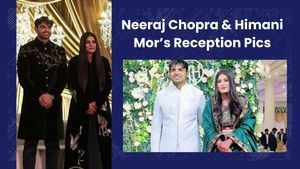 Neeraj Chopra & Himani Mor's Reception Pics: Inside the Viral Moments from the Celebrations


Check Your Pronunciation While Chanting The Mantras

Sanskrit slokas especially the veda hymns, when recited in the prescribed way, can give a pulse stopping peaceful experience and a sense of surrender to the supreme, when they are especially recited sonorously in a group.
It is only when we try to learn them and recite them, that we get into confusions. Many learned scholars cannot roll their tongues enough to get the mantra pronunciations right.

You need a basis of Sanskrit to master the basic and advanced pronunications as the slokas and hymns are all in sansrit. When you are reciting the vedas, perfect pronunciation lets you get absorbed by the sounds of the ancient Vedas.
Next, be sure that you get taped instructions in CDs created by masters on youtube or on their websites. Whereever you are learning from, the notation of Vedas has all the symbols written on them. the top and bottom dots, and long lines that occur above vowels.
Most importantly they should be in Sanskrit. Without these symbols, it is impossible to recite it in the raga or the intonation that is so much an important part of the pronunciation. This is about vedas.
the pitch changes that occur throughout the recitation, together create a tune that is so authentically a vedic raga. In Carnatak Music, it is identified as Mayamalavagoula. This helps you to recite vedas in their purest form.
Mantras
need
you
to
use
your
tongue
and
mouth
effectively
to
fetch
the
right
sound
out
of
every
mantra.
Mouth
positions
are
very
important
to
learn.
The words in Sanskrit slokas are so long and so much interwoven that you need to split them into meaningful parts or phrases first
This exercise is called sandhi vigraha and one should not go only by the rhythm of the sloka or mantra. One fine example for this would be the very first sloka of Raghuvamsam by Kalidasa. It goes thus.
Vaagarthaviva
samprukthou
vagartha(
p)
pratipatthaye|Jagatah
pitarou
vande
parvatheeparameshvarou|
If
you
are
reading
only
according
to
rhythm,
it
would
sound
like
this:
Vaagar
thaaviva
samprukthou
vagar
thappra
tipatthaye|
Jagatahpitarou
vande
paarvatheepa
rameshwarou|
The meaning for the second sloka changes entirely due to pronouncing the line according to the rhythm. The first sloka carries the meaning perfectly. The whole sloka should be split into meaningful phrases and then learnt together.
Another example would be this: Karmanye vadhikaarasthey maaphaleshu kadaachana| This is mostly mispronounced as karmanyevaa dhikaarasthe maaphaleshuka daachana
Especially while reciting slokas from powerful stotras like Lalita sahasranamam, one has to be doubly careful. You will only get the boons according to the way you pronunce it and the way the goddess understands it.
Splitting words is a great practice that helps you inch your way towards masterful pronunciation. The only way to escape the side effects of reciting it wrong, is to recite it with devotion, and after completing it, chant the following mantra which requests goddess to forgive any errors in pronunciations during the recitation of the stotra.
Yadakshara
padabhrashtam,
maatraaheenam
tu
yadbhaveth
Tat
sarvam,
kshamyataam
devee
praseeda
parameshwari
|
You
can
also
find
the
videos
of
Challakere
brothers
on
Youtube
that
is
perfect
with
all
the
pronunciation
nuances.


 Continue with Google