




 Click it and Unblock the Notifications


Latest Updates
-
 Bharti Singh-Haarsh Limbachiyaa Welcome Second Child, Gender: Couple Welcome Their Second Baby, Duo Overjoyed - Report | Bharti Singh Gives Birth To Second Baby Boy | Gender Of Bharti Singh Haarsh Limbachiyaa Second Baby
 -
 Bharti Singh Welcomes Second Son: Joyous News for the Comedian and Her Family
 -
 Gold & Silver Rates Today in India: 22K, 24K, 18K & MCX Prices Fall After Continuous Rally; Check Latest Gold Rates in Chennai, Mumbai, Bangalore, Hyderabad, Ahmedabad & Other Cities on 19 December
 -
 Nick Jonas Dancing to Dhurandhar’s “Shararat” Song Goes Viral
 -
 From Consciousness To Cosmos: Understanding Reality Through The Vedic Lens
 -
 The Sunscreen Confusion: Expert Explains How to Choose What Actually Works in Indian Weather
 -
 On Goa Liberation Day 2025, A Look At How Freedom Shaped Goa Into A Celebrity-Favourite Retreat
 -
 Daily Horoscope, Dec 19, 2025: Libra to Pisces; Astrological Prediction for all Zodiac Signs
 -
 Paush Amavasya 2025: Do These Most Powerful Rituals For Closure On The Final Amavasya Of The Year
 -
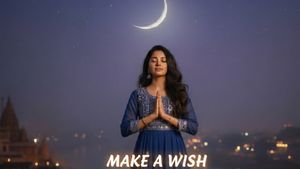 As The Last New Moon Of 2025 Approaches, Make A Wish Based On Your Rising Sign


Ahmedabad vs Delhi: Why Garba Festival Feels So Different In Both Cities

India is a land of festivals, where every celebration has its own flavour, rhythm, and essence. Shardiya Navratri, one of the most celebrated festivals of the country, is a perfect example of how diverse traditions come together under one spirit-devotion to the divine feminine.
While northern India observes the nine forms of Maa Durga with fasting, prayers, and Ramleela performances, West Bengal welcomes the daughter of the house, Maa Durga, with grandeur, food, and cultural festivities.

But when it comes to Navratri nights filled with Garba and Dandiya, the heart of the celebration lies in Gujarat. The difference between Garba in Ahmedabad and Dandiya events in Delhi NCR is striking-one is deeply rooted in traditions and rituals, while the other blends modernity and glamour. Let's dive into how these two cities celebrate the same festival with completely different vibes.
The Spirit of Jalsa In Ahmedabad
In Gujarat, the word "Jalsa" reflects the mood of celebration, joy, and togetherness. Families and friends gather on the roadside or in open spaces to enjoy food, conversations, and festive cheer. During Navratri, this Jalsa transforms into a spiritual and cultural festivity.
In Ahmedabad, Navratri celebrations usually begin with Maa ki Aarti at 9:30 PM. The energy in the air is electric-devotees, dancers, and folk artists come together to pay homage to Goddess Shakti before breaking into a rhythm of Garba that can last till dawn.
Unlike Delhi, where most Dandiya events wrap up by 10 or 11 PM, in Ahmedabad the night is just beginning. The true essence of Garba lies in these late-night celebrations where people lose themselves in music, rhythm, and devotion.

Garba Vs Dandiya: Not Just Dance, But Meaning
A common misconception outside Gujarat is that Garba and Dandiya are the same. However, they are distinct forms of dance, each with its own cultural significance.
Garba is a devotional dance dedicated to Shakti, the feminine energy. It is performed in a circular motion around a lamp or an image of Goddess Durga, representing the cycle of life, birth, and death. The steps involve ek taal, do taal, and graceful hand movements that synchronize with live folk music. Traditional instruments like the dhol, nagara, and harmonium set the tempo, while singers invoke Goddess Amba.
Dandiya Raas, on the other hand, has its roots in the leela of Lord Krishna, where sticks represent swords used in the battle against the demon Mahishasura. It is more playful, vibrant, and dynamic, often performed in pairs with sticks striking rhythmically.
In Delhi NCR, the line between Garba and Dandiya often blurs, with events largely marketed as "Dandiya Nights" filled with Bollywood remixes and Punjabi beats. But in Ahmedabad, the purity of Garba is preserved as a devotional art form first, and a celebration second.

Pandals vs. Events: Tradition vs. Glamour
Another major difference lies in the way spaces are decorated for Navratri.
In Delhi NCR, Dandiya events are often organized at hotels, clubs, or community centers with themes inspired by Bollywood, Punjabi culture, or even global party trends. The décor is bright and colorful, with neon lights, flashy backdrops, and DJ music dominating the scene.
In Ahmedabad, the Garba pandals exude a spiritual charm. They are decorated with bamboo structures, natural colors, traditional motifs, and lights that highlight the divine essence of the festival. The environment feels less commercial and more cultural, where the focus is on meaningful decorations and creating a sacred space for dance and devotion.
This difference reflects how each city interprets Navratri-Delhi as a fusion of culture and entertainment, Ahmedabad as a deep-rooted ritual woven with celebration.

Music That Moves the Soul
Music is at the heart of Navratri, and here too, Ahmedabad and Delhi take two different routes.
In Ahmedabad, folk artists perform live, often singing centuries-old Garba songs in Gujarati that have been passed down through generations. The authenticity of the live dhol beats, combined with synchronized claps and chants, creates a trance-like experience.
In contrast, Delhi NCR celebrations are dominated by Bollywood remixes and Punjabi tracks. While they bring energy and fun, they often miss the devotional core that makes Garba unique.
The Cultural Experience Beyond Dance
Celebrating Navratri in Ahmedabad isn't just about dancing-it's a cultural immersion. Food stalls selling farsan, fafda-jalebi, khichdi, and buttermilk keep the energy alive all night. Streets are lit with lights, families gather in open grounds, and there's a sense of belongingness.
Delhi NCR, being cosmopolitan, adapts the festival differently. Food courts feature multi-cuisine counters, DJs add variety, and fusion dance steps mix Garba with Bollywood freestyle. The atmosphere is modern, vibrant, and diverse-perfect for urban audiences.
Two Cities, One Festival, Different Souls
The beauty of Navratri lies in its diversity. Ahmedabad's Garba is a soulful, spiritual journey that keeps tradition alive through music, dance, and rituals. It's about celebrating the power of feminine energy in its purest form. Delhi's Dandiya Nights, on the other hand, are more about socialising, glamour, and entertainment-a fusion that appeals to the younger, urban crowd.
Both cities celebrate Navratri with unmatched enthusiasm, but if you want to truly experience the heart of Garba, Ahmedabad is where the beats of devotion and dance will move your soul.


 Continue with Google