




 Click it and Unblock the Notifications


Latest Updates
-
 Arjun Tendulkar And Saaniya Chandhok’s Love Story: From Friendship to Forever
 -
 Baba Vanga 2026 Predictions: 5 Lucky Zodiac Signs That Could Attract Wealth and Prosperity In The New Year
 -
 Winter Skin Care for Acne-Prone and Sensitive Skin: Expert Explains A Gentle, Step-by-Step Approach
 -
 Who Is Rupal Sidhpura Faria? Bollywood’s Favourite Yoga Guru
 -
 Delhi Weather and Pollution Update: AQI Remains Severe as Dense Fog Persists
 -
 Is January 1, 2026 A Holiday? What’s Open And Closed On New Year’s Day In India
 -
 Gold Rate in India Today Crashes Before New Year 2026; 24K & 22K Gold Price Drops Rs. 7,000/100g; Silver Smashes Record on DEC 29
 -
 New Year Fashion Guide: Looks That Feel Confident and Cool
 -
 Annual Health Checks Are Changing: Expert Explains Why Blood Tests Alone Aren’t Enough Anymore
 -
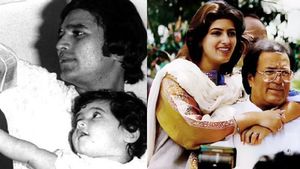 A Father-Daughter Birthday Bond: Rajesh Khanna's 83rd Birth Anniversary Is On Twinkle Khanna’s 51st Birthday


Aarti During Worship: Right Way To Do Aarti And Rules Involved

The lights of Diwali and Karthikai festivals lend a festive air and it is indeed a euphoric feeling to see so many lights glowing around you together in bunches on these festivals.
We light candles, diyas and lamps but they are a visual pleasure to say the least. When the same diyas are used in a puja room, it induces a feeling of piety and devotion in you.

Generally, God symbolises light and cheer and the lights in the puja room convey this to us. There is an ancient belief according to which, the Agni in the diya, will take our prayers to God and ensures that our wishes are fulfilled.
Without Aarti, our pujas are not complete. Read in detail to know how fully you can make use of the benefits of Aarti procedure.
When Should We Do Aarti?: According to Hindu belief, your worship is considered incomplete without an aarti. When you do morning and evening puja, you could do the Aarti at the end of each puja.
See that you perform the pujas at a regular prescribed time. If you prefer, you can do aarti even five times during a day. There are a few types of Aarti done to Gods.
At Shirdi, they perform Kakad Aarti, Madhyan Aarti, Dhoop Aarti, and Shej Aarti. You could do aarti even five times during the day.
Method Of Performing Aarti To God: There are several types of aarti holders with which you can use the wicks. You can use 1,2, or even 5 wicks in a lamp with five angles or faces.
You can take any type of diya and light the lamp, You can also choose to use different types of oil for lighting the diya. Ghee diya is unanimously believed to be most auspicious.
Some oils are not to be used as per the restrictions. Firstly the aarti should be rotated four times at the feet of the God, twice at the navel of the God and lastly around his face.
Can aarti be performed sitting down?: It is an unwritten rule that Aarti should be performed in the standing posture but in exceptional circumstances it can be done while sitting.
If you are sick, or weak, you can apologise to God and then perform Aarti. As per Hindu belief, if you are unable to stand physically or are sick, then you can sit and do aarti by apologising to God. Aarti performed with pure intentions, will certainly yield the results.
Rules To Abide By: After performing Aarti, the first thing the Archak should do is to leave a little teertha on the aarti plate.
After this the holy water or teertha should be sprinkled on everyone. Then the archak should should first receive the Aarti and then start giving it or showing it to the devotees, one by one.
Aarti is generally viewed as the concluding part of any puja. The first phase of Puja is the Anushthan and the second phase is the Aarti.
It is a gesture of gratitude of the worshipper towards God. Gratitude is something we feel deeply towards somebody who has helped us in real life.
What about God, who has created us, given a set of dedicated parents, and beautiful world to live in, and opportunities to enhance the quality of our lives?
What do you give him back? Let us do Aarti to express this. Done with devotion and brimming gratitude, Aarti is enough to please him, scriptures say.
To do the Aarti, you need to have a wick and a diya, Place these on the plate, and the wick inside the diya. Pour a little oil all over the wick so that it is totally soaked in oil.
Then light the wick in the diya. Rotate this plate clockwise in front of the idol. Aarti should never be done anticlockwise. Even the pradakshina around the deity should be started in the clockwise direction.
There is no anticlockwise direction with respect to auspicious occasions. You can chant a mantra while you doing the Aarti or chant a sloka after Aarti is done. Ask for Gods blessings.
Aarti is a beautiful experience which lets you feel the divinity inside yourself, when it is especially done during the wee hours in the morning.
You enjoy how slowly the darkness gives way to light, reminding us of Tamasoma jyotirgamaya. It destroys negativity of any kind.
Positivity that this procedure exudes creates an armour called Tarangakavacha that protects the devotee from any negativity around. Aarti is done with the sacred fire which not only illuminates the area but also cleanses your instincts from within.


 Continue with Google