




 Click it and Unblock the Notifications


Latest Updates
-
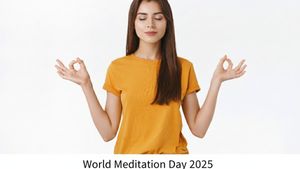 World Meditation Day 2025: Meditation Beyond The Mat, Simple Moments That Bring Inner Peace
 -
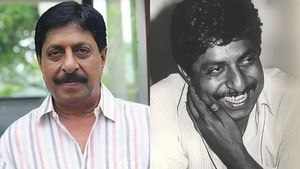 Sreenivasan Passes Away: Malayalam Cinema Mourns The Legendary Actor-Writer's Demise
 -
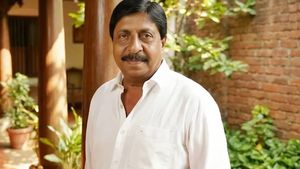 Malayalam Film Industry Loses A Defining Voice: Actor, Screenwriter And Director Sreenivasan Passes Away At 69
 -
 Happy Birthday Dheeraj Dhoopar: How A TV Set Friendship Turned Into Love With Wife Vinny Arora
 -
 Top Skin and Hair Concerns in India in 2025: What the Data Reveals
 -
 International Human Solidarity Day 2025: History, Significance, and Why It Matters
 -
 Purported Video of Muslim Mob Lynching & Hanging Hindu Youth In Bangladesh Shocks Internet
 -
 A Hotel on Wheels: Bihar Rolls Out Its First Luxury Caravan Buses
 -
 Bharti Singh-Haarsh Limbachiyaa Welcome Second Child, Gender: Couple Welcome Their Second Baby, Duo Overjoyed - Report | Bharti Singh Gives Birth To Second Baby Boy | Gender Of Bharti Singh Haarsh Limbachiyaa Second Baby
 -
 Bharti Singh Welcomes Second Son: Joyous News for the Comedian and Her Family


Indian Classical Dance - Odissi

Odissi (Orissi) is the Indian classical dance having its origin from the eastern parts of Orissa. This art form with curvaceous movements, sculpturesque poses and full of languid grace had a unique place among Indian classical dances since its origin. Let us have a brief look at the history and features of this exceptional dance form.
Odissi traces its origin to the ritual dances performed in the temples of ancient northern India. The classical dance form was initially performed by maharis(temple dancers). Maharis essentially performed the panchkanya dance forms. Later it was performed by Gotipua dancers, who were originally pre-pubescent boys. They concentrated more on the chaukha style of odissi with many acrobatic elements.
Odissi has a long but, broken tradition. The oldest surviving forms of Odissi can be found in 2200BC old caves of Khandagiri and Udayagiri in Orissa. However it suffered a decline as temples and artists lost the patronage of princely states. By the 1930s and 40s, there were very few surviving practitioners of the art.
Jayantika was a movement to restore the lost glories of the exceptional dance form. Dedicated scholars and dance enthusiasts carefully researched manuscripts, the sculpture, painting and poetry of the region. They revived Odissi to the current form by the middle of 20th century. In 1958, Odissi was given the status of a classical dance by the government of India.
Odissi has two main postures called as tribhanga and chaukha. Tribhanga is a thrice deflected posture and very feminine in features. Chaukha is a wider posture of araimandalam in bharatanatyam.
Odissi will start with the invocatory item 'Mangalacharan', a tribute to Mother Earth, Lord Jagannath and the other Gods, also with stanzas to welcome the audience and to thank one's Gurus. Odissi has two major facets as nritta and abhinaya. Nritta is a non representational facet in which ornamental patterns are created by using body movements in space and time. Abhinaya is a stylized mime in which symbolic hand gestures or facial expressions are used to interpret the theme.
The favourite themes of odissi performance is the divine love between Radha and Lord Krishna. It will contain at least one or two ashtapadis from Jayadeva's Gita Govindam, which describes in exquisite Sanskrit poetry the complex relationship between Radha and her Lord. Other common themes of odissi are Dashavatara, a description of the ten incarnations of Lord Vishnu and Batu Nritta, based on Lord Shiva.
The
foremost
proponents
of
odissi
are
Guru
Padma
Vibhusan
Kelucharan
Mohapatra,
Guru
Pankaj
Charan
Das
and
Guru
Deba
Prasad
Das.
Smt.
Sanjukta
Panigrahi
helped
Guru
Padma
Vibhusan
Kelucharan
Mohapatra's
en
devours
at
all
instances.
The
present
renowned
odissi
dancers
are
dancers
includes
Sujata
Mohapatra,
Aloka
Kanungo,
Gangadhar
Pradhan,
Surupa
Sen,
Bijayini
Satpathy,
Madhumita
Patnaik,
Durga
Charan
Ranbir,
Jhelum
Paranjape,
Ramli
Ibrahim,
Ratna
Roy,
Madhavi
Mudgal,
Sonal
Mansingh,
Ileana
Citaristi
and
many
others.


 Continue with Google