




 Click it and Unblock the Notifications


Latest Updates
-
 Bharti Singh-Haarsh Limbachiyaa Welcome Second Child, Gender: Couple Welcome Their Second Baby, Duo Overjoyed - Report | Bharti Singh Gives Birth To Second Baby Boy | Gender Of Bharti Singh Haarsh Limbachiyaa Second Baby
 -
 Bharti Singh Welcomes Second Son: Joyous News for the Comedian and Her Family
 -
 Gold & Silver Rates Today in India: 22K, 24K, 18K & MCX Prices Fall After Continuous Rally; Check Latest Gold Rates in Chennai, Mumbai, Bangalore, Hyderabad, Ahmedabad & Other Cities on 19 December
 -
 Nick Jonas Dancing to Dhurandhar’s “Shararat” Song Goes Viral
 -
 From Consciousness To Cosmos: Understanding Reality Through The Vedic Lens
 -
 The Sunscreen Confusion: Expert Explains How to Choose What Actually Works in Indian Weather
 -
 On Goa Liberation Day 2025, A Look At How Freedom Shaped Goa Into A Celebrity-Favourite Retreat
 -
 Daily Horoscope, Dec 19, 2025: Libra to Pisces; Astrological Prediction for all Zodiac Signs
 -
 Paush Amavasya 2025: Do These Most Powerful Rituals For Closure On The Final Amavasya Of The Year
 -
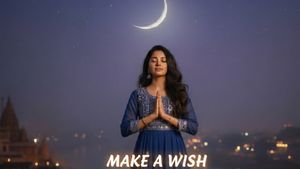 As The Last New Moon Of 2025 Approaches, Make A Wish Based On Your Rising Sign


Karan Aujla And Honey Singh Face Heat Over Lyrics: Can You Enjoy Music Without Agreeing With Its Message?

Music is often called a universal language, but what happens when the words in a song clash with your personal values?
The Punjab State Commission for Women has stepped in after two of Punjab's biggest music stars-Karan Aujla and Yo Yo Honey Singh-found themselves in hot water over their latest tracks.

The panel has taken suo motu notice of what it calls "objectionable language" against women in Aujla's MF Gabru and Honey Singh's Millionaire. These songs, both dominating streaming platforms and social media reels, have sparked a fresh debate on how far artistic freedom can stretch before crossing the line.
Also, this raises an important cultural question: can we separate the beat from the message? Or does enjoying the rhythm automatically mean endorsing the words?
#WATCH | Mohali, Punjab: On Punjab Women Commission takes suo motu notice against Karan Aujla and Yo Yo Honey Singh over alleged misogynistic lyrics, Raj Lali Gill, Chairperson of Punjab Women Commission, says, "Everyone has listened to the song and objected, but it still gets… pic.twitter.com/Rg3KJfxcuv
— ANI (@ANI) August 7, 2025
When Music Sounds Good But Feels Wrong
It's not unusual to love a song's melody while cringing at its lyrics. Think of tracks with addictive hooks but problematic messages - they stay in your head even when you wish they wouldn't. In the case of MF Gabhru and Millionaire, fans have praised the beats, yet critics argue the lyrics normalise derogatory or controversial themes. This tug-of-war between sound and substance is where the listener's moral compass gets tested.
The Thin Line Between Artistic Expression and Offence
Artistic freedom allows singers to explore bold themes, but it also raises the issue of responsibility. Lyrics can influence thought patterns, especially among younger listeners.
The problem isn't always blatant hate speech - sometimes, it's the subtle normalisation of stereotypes or harmful behaviour. Defenders of these artists claim that music is a reflection of society, not the cause of its ills. Opponents believe that once art reaches millions, it must be more conscious.
Why Controversial Lyrics Sell More Than Clean Ones
Ironically, outrage can make a song more popular. History shows that controversy boosts streaming numbers and brings free publicity. Both MF Gabhru and Millionaire are trending on music platforms despite the criticism. Some listeners even admit they checked out the songs just to see "what the fuss was about." This phenomenon makes the debate trickier - are we accidentally rewarding the very behaviour we're criticising?
The Psychology of Enjoying Music You Disagree With
Neurologically, our brains respond to rhythm and melody on an emotional level before processing words. That's why you might find yourself tapping your foot to a track whose lyrics you wouldn't quote in public. For many listeners, this creates a mental split: they enjoy the sound but consciously ignore the message. The question is, does selective listening absolve us from the cultural impact these songs have?
How Listeners Can Make Ethical Choices Without Killing the Fun
Enjoying music doesn't have to mean endorsing every lyric. One way to navigate this is by supporting clean versions, remixes, or artists who align with your values. Another is by being an active listener - acknowledging when lyrics are problematic instead of brushing them off. Conversations around such music can also push the industry toward more mindful content without stripping away creativity.
When It's Okay To Say 'No' to A Song
Sometimes, no matter how catchy a song is, the message might feel too toxic to overlook. In those cases, choosing not to stream or share it sends a clearer signal than online outrage alone. After all, the charts are shaped by what we play - silence can be a stronger protest than criticism.
The real question is whether we're willing to be conscious consumers, using our playlists not just for entertainment but also for the kind of culture we want to encourage.


 Continue with Google