




 Click it and Unblock the Notifications


Latest Updates
-
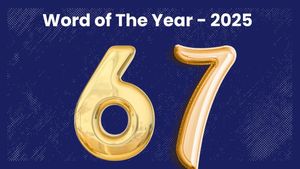 “67” Is Dictionary.com’s 2025 Word of the Year: The Viral Trend With No Meaning That Took Over the Internet
 -
 Bus Catches Fire After Collision With Lorry In Karnataka; At Least 10 Dead
 -
 Skin Cycling, Glass Skin, and Sunscreen Stacking: The Internet’s Craziest Skincare Trends Explained
 -
 Post-Christmas Bloating Is Real: What Your Body Is Trying to Tell You
 -
 Atal Bihari Vajpayee Birthday 2025: Celebrating Good Governance Day in India
 -
 Think Twice This Christmas 2025: These Gifts Are A Total No For These Zodiac Signs
 -
 Daily Horoscope, Dec 25, 2025: Libra to Pisces; Astrological Prediction for all Zodiac Signs
 -
 Junk Food Blame After UP Teen’s Death at AIIMS: Here’s What the Medical Reports Reveal
 -
 Kiara Advani’s First Post-Baby Photoshoot Is Here and Her Vogue Look Is Pure Old-World Magic
 -
 Healthy Christmas Plate: Festive Food Swaps That Keep Energy High And Bloating Low


Stressed-out moms at risk of poor mental health

NEW YORK, May 31 (Reuters) Mothers of young children who feel they lack emotional support or help in caring for their children have more than three-times the risk of mental health problems compared to their peers who feel adequately supported, a new study shows.
More than one third of the 1,747 mothers participating in the study reported at least one parenting stressor that boosted their risk of mental health problems, Dr. Ritesh Mistry of the University of California, Los Angeles and colleagues note in the American Journal of Public Health. ''If parenting stressors such as those examined here are to be addressed, changes may be required in community support systems, and improvements in relevant social policies may be needed,'' they conclude.
Mothers of small children are known to face a substantial risk of mental health problems and their mental health has a ''strong influence'' on their child's health and development, the researchers note.
Mistry and associates conducted the study to determine how certain parenting-related stressors might affect mothers' mental health and whether these stressors were related to financial and social factors.
The mothers of children 4 to 35 months old completed a five-item questionnaire to assess their general mental health.
Women who reported feeling a lack of emotional support (they had no one to rely on for day-to-day emotional help with parenting) represented nearly 14 per cent of the total sample and were 3.4 times more likely to report being in poor mental health, the researchers found.
Roughly 12 per cent of mothers who said they lacked functional support in caring for their children (they had no one to care for their children when they needed a break) had a 2.2-times greater risk of poor mental health.
When asked about time spent with their child, 37.2 per cent of mothers said they spent too little, 11.2 per cent said they spent too much, and 51.6 per cent said the amount of time they spent with their child was just right. While mothers who said they spent too little time with their children had a slightly increased risk of poor mental health, those who said they spent too much time had a 3.5-times greater risk of mental health problems.
Overall, mothers who reported having one parenting-related stress or had triple the risk of poor mental health, while having two or more stress or increased risk nearly 12-fold.
Improving family leave policies and making high quality child care more ''affordable and accessible'' could help ease the stresses on parents identified in the current study, they add. They conclude by calling for further research to investigate how such stresses affect fathers' mental health.


 Continue with Google