




 Click it and Unblock the Notifications


Latest Updates
-
 Mahayuti Sweeps Maharashtra Local Body Polls, BJP Emerges Largest Party
 -
 The World’s First Harry Potter-Themed Hotel Is All Set to Open In Europe
 -
 Dhurandhar 16 Days Collection | Dhurandhar Beats Jawan, Stree 2 | Dhurandhar 500cr | Dhurandhar Day 16 Collection | Dhurandhar Box Office Collection Day 17 Prediction (December 21, 2025) | Dhurandhar Third Weekend Collection Prediction | Dhurandhar Today Collection
 -
 How to Dress Well This Holiday Season Without Overthinking It
 -
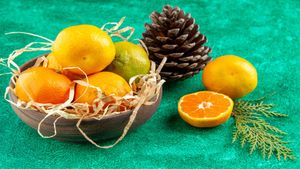 From Guava To Kiwi: Fruits to Have in Winters to Boost Your Immunity
 -
 David Guetta Returns to Mumbai After 8 Years, Lights Up Sunburn Festival 2025
 -
 How Homeopathic Remedies May Support Gut and Brain Health, Expert Explains
 -
 Why Viral Fevers Are Lasting Longer This Year: Expert Explains The Immunity Shift Post-COVID
 -
 Rekha’s Timeless Wedding Season Style: 5 Things to Pick From Her Latest Look
 -
 Gold Rate Today in India Flat, Silver Prices Jump to New High of Rs 2.14 Lakh: Check Latest Prices in Chennai, Bangalore, Hyderabad, Mumbai, Pune, Ahmedabad & Delhi


The Bonsai Types

Bonsai cultivation mainly depends on personal choice. The aesthetic appeal to it can be given only with one's one personal touch. There are no hard and fast rules for them. For a start you could refer a book or even a friend's guidance would help. If there are Bonsai nurseries or shows happening in your city or town, do visit them. It would help familiarize with the types and styles. But always the underlying statement would be, be as creative as possible.
The two basic styles of bonsai are the classic (koten) and the informal or 'comic' (bunjin). Classic has the trunk of the tree wider at the base, which gradually tapers towards the top; Bunjin however is just the opposite and easy to master.
There are five main types in Bonsai, Formal upright, Informal upright, Slanting (or windswept), Semi-cascade and Cascade.
Formal upright: A tree in this style typically has a straight trunk tapering naturally and evenly from base to apex. The branches are ideally well spaced out and is mostly grown out in the open. Well, it's quite a demanding style. But nothing is difficult for a Bonsai enthusiast. You could grow Pines and Maples in this style.
Informal upright: If you have observed the growth of trees, they change direction on the basis of light or wind. In an informal upright bonsai the trunk will be slightly bent to the right or left but never towards the viewer. In fact in all types of Bonsais neither the trunk nor branches point towards the viewer, when it is viewed from the front. The style still requires a tapered trunk, however the trunk direction and branches are more informal Japanese Maple, Trident Maple, Pomergranate and all conifers can be grown in this style.
Slanting: During the early stages of development plants exposed to lots of shade and wind tend to slant. The stronger roots grow at the side, away from the trunk and this helps hold the tree. Here the trunk maybe curved or straight. It has to curve to the left or right and not in the front. This is simple and can be achieved by wiring the trunk at an early age until you get the desired shape. You could also try slanting the pot and growing the plant in that slanted pot.
Cascade: Here the trunk has a natural taper and has a winding look. Branches seem to seek light desperately. This is aesthetically pleasing. A narrow pot will help give you a cascading Bonsai. The main trunk needs to be wired so as to spill over the sides of the pot.
Semi Cascade: Like the cascade, the semi cascade falls around the rim of the container but does not drop down. You could have cherries, cedars and Junipers.
Go ahead have your own Bonsai garden.


 Continue with Google