




 Click it and Unblock the Notifications


Latest Updates
-
 Weekly Career Horoscope 23–28 December 2025: Aries! Year-End Efforts Bring Recognition And Clarity
 -
 Weekly Love Horoscope 23–28 December 2025: Virgo! Letting Go Of Control Improves Your Love Life
 -
 Year Ender 2025: The Top 10 Best Local Food Cities In The World, Amchi Mumbai Makes It To The List Too!
 -
 Silver Hits Record High Above $67/oz on Safe-Haven Demand; MCX Prices Jump: Check Latest Silver Rates Today in Top Cities Like Chennai, Mumbai, Bangalore & Other Cities
 -
 Tips to Maintain Your Holiday Glow This Pollution Season
 -
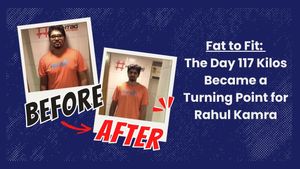 Fat to Fit: The Day 117 Kilos Became a Turning Point for Rahul Kamra
 -
 Where To Eat, Drink And Celebrate In Bengaluru For A Very Merry Christmas 2025
 -
 Dry Skin Vs Dehydrated Skin: Expert Explains The Winter Difference
 -
 ‘The Wire’ and It: Chapter Two Actor James Ransone Dead at 46; Cause of Death Confirmed as Suicide by Hanging
 -
 Fan Frenzy Crosses The Line: Samantha Ruth Prabhu Mobbed At Store Launch Days After Nidhhi Agerwal Incident


Job Loss Can Make You Sick


Experts opine that health shares quite a close relationship with the kind of job one does. "In today's economy, job loss can happen to anybody," said Kate Strully, who conducted the research as a Robert Wood Johnson Foundation Health and Society scholar at the Harvard School of Public Health. "We need to be aware of the health consequences of losing our jobs and do what we can to alleviate the negative effects," the expert added.
In the study, Strully found that 'job churning', defined as high rates of job loss but low unemployment, has negative health consequences for workers who were not already sick. For those who lost their job-white or blue collar-through no fault of their own, such as an establishment closure, the odds of reporting fair or poor health increased by 54 percent, and among respondents with no pre-existing health conditions, it increased the odds of a new health condition by 83 percent. Even when workers became re-employed, those workers had an increased risk of new stress-related health conditions.
Unlike the results of job loss due to an establishment closure, when health effects were analyzed based on workers who were fired or laid off, significant differences were found based on the workers' occupations. While being fired or laid off or leaving a job voluntarily more than doubles the odds of a fair or poor health report among blue-collar workers, such job displacements have no significant association with the health reports of white-collar workers.
The reasons for this disparity are unclear based on the study results.The study was conducted based on data from the U.S. Panel Study of Income Dynamics, a nationally representative survey from 1999, 2001 and 2003. The study looked at establishment closures that included a range of occupations, including managerial or professional positions (30 percent displacement), sales, clerical, and craft jobs, (33 percent displacement), a machine operator jobs (20 percent displacement), and service positions (13 percent displacement).
AGENCIES
Disclaimer: The information provided in this article is for general informational and educational purposes only and is not intended as a substitute for professional medical advice, diagnosis, or treatment. Always seek the advice of your physician or a qualified healthcare provider with any questions you may have regarding a medical condition.


 Continue with Google