




 Click it and Unblock the Notifications


Latest Updates
-
 Gold Rate In India Crash By Rs 12,000 From Record: Will 24K, 22K, 18K Gold Prices Rise Or Fall In Christmas Week? Gold & Silver Prediction Here
 -
 20th or 21st December? When Is the Winter Solstice In 2025 And How Is It Different From Meteorological Winter
 -
 ‘Clean Air Is a Right, Not a Luxury’: ZONAIR3D Unveils India Expansion Plans
 -
 World Meditation Day 2025: Meditation Beyond The Mat, Simple Moments That Bring Inner Peace
 -
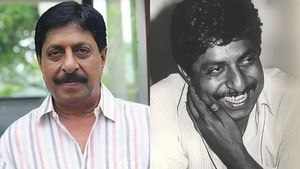 Sreenivasan Passes Away: Malayalam Cinema Mourns The Legendary Actor-Writer's Demise
 -
 Malayalam Film Industry Loses A Defining Voice: Actor, Screenwriter And Director Sreenivasan Passes Away At 69
 -
 Happy Birthday Dheeraj Dhoopar: How A TV Set Friendship Turned Into Love With Wife Vinny Arora
 -
 Top Skin and Hair Concerns in India in 2025: What the Data Reveals
 -
 International Human Solidarity Day 2025: History, Significance, and Why It Matters
 -
 Purported Video of Muslim Mob Lynching & Hanging Hindu Youth In Bangladesh Shocks Internet


Stage Makeup ...Contd


Begin by tilting the head back slightly and then apply 3-D Gel to the desired area. Pour the gel from the bottle, allowing it to run down the face. Use a brush to thin the gel out. 3-D Gel is safe to put in the eyebrows and eyelashes.
Open
Wounds
&
Cuts
Apply
a
patch
of
3-D
Gel
to
the
skin
and
blend
out
the
edges.
Keep
the
patch
level
to
prevent
the
gel
from
running
outside
the
edges.
Cut
through
the
middle
and
pull
back
flaps.
Use
dots
of
liquid
gel
to
tack
back
the
flaps
and
hold
them
in
place.
Apply makeup to match the surrounding skin, and then use Colorset Powder to set the makeup. You can color the skin inside the wound with burgundy makeup or lip pencils to give the look of deeper muscle tissue. Finally, put a thick layer of 3-D Gel Blood in the wound and let it splatter up or run over the pulled back skin and onto the surrounding skin. Apply the 3-D Gel Blood last, as you want it to set up shiny and wet looking.
Character
make
up
When
you're
making
an
actor
into
another
person
you
must
alter
his
appearance
so
it
fits
the
new
character.
If
the
character
is
mean,
kind,
fat,
thin
or
ugly
you
must
change
the
actors
own
features
to
match
this.
To
be
able
to
do
this
a
lot
of
different
methods
can
be
used
such
as
wigs,
false
teeth
and
facial
prosthetics.
When you're doing a highlight and shadow makeup you are really just using the actors own features to alter his looks by showing and hiding things that are already there. Depending on what kind of stage you are working on the makeup can differ quite a bit. If you're working on a small stage you have to put on makeup which is very subtle but for a big stage it can look really grotesque in person but great on stage.
Character makeup can also sometimes be classical makeup's like the Peking opera masks or Japanese kabuki makeup.


 Continue with Google